
It looks like an image from science fiction: a 262m-tall lighthouse-style tower rising from the centre of hundreds of concentric circles of shining panels. But, if all goes to plan, these ambitious design renderings will become science fact, as the fourth development phase of Dubai’s colossal $14bn solar power park.
VirtualRealitySheikh Mohammed bin Rashid, Vice President and Ruler of Dubai, at the MBR Solar Park (24 November 2020)That’s 10,943,945,000 pounds sterling (£).
Images @ Dubai Electricity and Water Authority
In the fossil fuel-rich Gulf, however, the Mohammed bin Rashid al-Maktoum Solar Park, as it is known — which was begun in 2013 and is largely up and running — remains an outlier. Overall, the region’s renewable energy investments have lagged behind China, the US and Europe.
In its 2024 report on energy investment, published this month, the International Energy Agency said the broader Middle East, including countries such as Iran and Iraq, was allocating just 20 cents to renewable energy investment for every dollar spent on fossil fuels — or one-tenth of the global average. The IEA added that, of the $175bn the region was expected to invest in energy projects this year, just 15 per cent would go to clean energy.
The oil and gas reserves sitting below the Gulf states have previously discouraged any rapid development of renewables. “The Gulf countries are blessed with a vast amount of resources of oil and gas,” notes Aisha al-Sarihi, research fellow at the National University of Singapore’s Middle East Institute. “That has made access to energy very affordable … and eliminated the need for alternatives.”
Electricity was previously powered by oil in large part. But downward pressure on oil prices from increased US shale oil triggered a shift in the mid-2010s, making gas and renewables more viable as more oil supplies were reserved for export, says Karen Young, chair of the Economics and Energy Program Advisory Council at the Washington, DC-based Middle East Institute.
During that period there was a “ramping-up of the kind of fiscal-side reforms on spending”, says Young, and the “beginning of talking about reduction of subsidies of gasoline, of electricity prices, water prices”.
Even as the wealthy Gulf nations have become more aware of the need to decouple their economies from oil, the United Arab Emirates’ hosting of the COP28 climate meeting last year encapsulated the paradoxes that surround the Gulf states’ role in the energy transition.
On the one hand, the Dubai COP ensured that producer countries were at the centre of the negotiations, with oil-rich emirate Abu Dhabi — the UAE’s capital and centre of political power — wanting to expand fossil fuel production. On the other, Dubai, for the first time, secured a deal to transition away from fossil fuels, and the UAE set aside $30bn for a “catalytic climate investment fund”.
Although the transition from fossil fuels in many industries could theoretically reduce demand for crude oil, the Gulf states do not view this as an existential threat to their revenues.
“The producers in the Gulf see a different scenario — and particularly a lifeline through petrochemicals — [in which] there will be sustained demand for their product for at least the next 20 years,” says Young.
The Gulf states “believe they will be the last man standing because they will sell the lowest carbon intensity fuel in the future”, adds al-Sarihi, on the basis that compared with other sources of oil, those in the region require the least amount of energy to extract.
However, at the same time, economics and strategic interests are galvanising petrodollar-financed renewable energy investments by the Gulf. This spending is led by the UAE and Saudi Arabia, which are actively working to diversify their economies and reduce their dependence on fossil fuels.
The Gulf states have a “dual approach” to the energy transition, according to al-Sarihi. “One is to continue with the fossil fuel industry and … invest in clean energy technologies and other resources like hydrogen,” she says.
“The Gulf states are taking advantage of the international arena when it comes to the energy transition,” adds al-Sarihi. “They use it as a platform to exert their energy diplomacy and influence in a way that makes the energy transition serve their interest … they try to secure a market for their energy supplies. They are now pivoting to Asia because it is becoming the centre of demand for energy.”
But the autocratic states are not investing very widely across the energy transition, points out Robin Mills, Dubai-based chief executive of consultancy Qamar Energy. There has been scant movement towards decarbonising in transport or industrial sectors, for example. “The real investments have been around the power sector — solar and nuclear,” Mills says.
For example, the UAE’s Barakah nuclear plant will meet up to a quarter of the country’s electricity needs by the time all four of its reactors are fully operational. And, in Saudi Arabia, while just 0.2 per cent of the electricity was generated by renewables in 2022, according to US government statistics, solar power plants have been built, including the 1.5GW capacity Sudair.
The Gulf states are also investing in clean power in other countries, from central Asia to central Africa. Young highlights Masdar, Abu Dhabi’s renewable energy investment vehicle, and Saudi’s national champion ACWA Power as “two of the most important power developers in emerging markets in the world”.
“They’re competing and partnering with the biggest infrastructure investors in the world, she observes. “They’re doing this in ways that I think have enormous soft power, political influence.”
Given the collapse of the Netanyahu Government over the Wye peace agreement, it is time to question whether the entire process begun in Oslo in 1993 is the right instrument for bringing peace between Palestinians and Israelis. It is my view that the peace process has in fact put off the real reconciliation that must occur if the hundred-year war between Zionism and the Palestinian people is to end. Oslo set the stage for separation, but real peace can come only with a binational Israeli-Palestinian state.
This is not easy to imagine. The Zionist-Israeli official narrative and the Palestinian one are irreconcilable. Israelis say they waged a war of liberation and so achieved independence; Palestinians say their society was destroyed, most of the population evicted. And, in fact, this irreconcilability was already quite obvious to several generations of early Zionist leaders and thinkers, as of course it was to all Palestinians.
“We can not fight for our rights and our history as well as future until we are armed with weapons of criticism and dedicated consciousness.”
“Zionism was not blind to the presence of Arabs in Palestine,” writes the distinguished Israeli historian Zeev Sternhell in his recent book, “The Founding Myths of Israel.” “Even Zionist figures who had never visited the country knew that it was not devoid of inhabitants. At the same time, neither the Zionist movement abroad nor the pioneers who were beginning to settle the country could frame a policy toward the Palestinian national movement. The real reason for this was not a lack of understanding of the problem but a clear recognition of the insurmountable contradiction between the basic objectives of the two sides. If Zionist intellectuals and leaders ignored the Arab dilemma, it was chiefly because they knew that this problem had no solution within the Zionist way of thinking.”
David Ben-Gurion, for instance, was always clear. “There is no example in history,” he said in 1944, “of a people saying we agree to renounce our country, let another people come and settle here and outnumber us.” Another Zionist leader, Berl Katznelson, likewise had no illusions that the opposition between Zionist and Palestinian aims could be surmounted. And binationalists like Martin Buber, Judah Magnes and Hannah Arendt were fully aware of what the clash would be like, if it came to fruition, as of course it did.
Vastly outnumbering the Jews, Palestinian Arabs during the period after the 1917 Balfour Declaration and the British Mandate always refused anything that would compromise their dominance. It’s unfair to berate the Palestinians retrospectively for not accepting partition in 1947. Until 1948, Jews held only about 7 per cent of the land. Why, the Arabs said when the partition resolution was proposed, should we concede 55 per cent of Palestine to the Jews, who were a minority in Palestine? Neither the Balfour Declaration nor the mandate ever specifically conceded that Palestinians had political, as opposed to civil and religious, rights in Palestine. The idea of inequality between Jews and Arabs was therefore built into British, and subsequently Israeli and United States, policy from the start.
The conflict appears intractable because it is a contest over the same land by two peoples who always believed they had valid title to it and who hoped that the other side would in time give up or go away. One side won the war, the other lost, but the contest is as alive as ever. We Palestinians ask why a Jew born in Warsaw or New York has the right to settle here (according to Israel’s Law of Return), whereas we, the people who lived here for centuries, cannot. After 1967, the conflict between us was exacerbated. Years of military occupation have created in the weaker party anger, humiliation and hostility.
To its discredit, Oslo did little to change the situation. Arafat and his dwindling number of supporters were turned into enforcers of Israeli security, while Palestinians were made to endure the humiliation of dreadful and non-contiguous “homelands” that make up about 10 per cent of the West Bank and 60 per cent of Gaza. Oslo required us to forget and renounce our history of loss, dispossessed by the very people who taught everyone the importance of not forgetting the past. Thus we are the victims of the victims, the refugees of the refugees.
Israel’s raison d’etre as a state has always been that there should be a separate country, a refuge, exclusively for Jews. Oslo itself was based on the principle of separation between Jews and others, as Yitzhak Rabin tirelessly repeated. Yet over the past 50 years, especially since Israeli settlements were first implanted on the occupied territories in 1967, the lives of Jews have become more and more enmeshed with those of non-Jews.
The effort to separate has occurred simultaneously and paradoxically with the effort to take more and more land, which has in turn meant that Israel has acquired more and more Palestinians. In Israel proper, Palestinians number about one million, almost 20 per cent of the population. Among Gaza, East Jerusalem and the West Bank, which is where settlements are the thickest, there are almost 2.5 million Palestinians. Israel has built an entire system of “bypassing” roads, designed to go around Palestinian towns and villages, connecting settlements and avoiding Arabs. But so tiny is the land area of historical Palestine, so closely intertwined are Israelis and Palestinians, despite their inequality and antipathy, that clean separation simply won’t, can’t really, occur or work. It is estimated that by 2010 there will be demographic parity. What then?
Clearly, a system of privileging Israeli Jews will satisfy neither those who want an entirely homogenous Jewish state nor those who live there but are not Jewish. For the former, Palestinians are an obstacle to be disposed of somehow; for the latter, being Palestinian in a Jewish polity means forever chafing at inferior status. But Israeli Palestinians don’t want to move; they say they are already in their country and refuse any talk of joining a separate Palestinian state, should one come into being. Meanwhile, the impoverishing conditions imposed on Arafat are making it difficult for him to subdue the highly politicized inhabitants of Gaza and the West Bank. These Palestinians have aspirations for self-determination that, contrary to Israeli calculations, show no sign of withering away. It is also evident that as an Arab people — and, given the despondently cold peace treaties between Israel and Egypt and Israel and Jordan, this fact is important — Palestinians want at all costs to preserve their Arab identity as part of the surrounding Arab and Islamic world.
For all this, the problem is that Palestinian self-determination in a separate state is unworkable, just as unworkable as the principle of separation between a demographically mixed, irreversibly connected Arab population without sovereignty and a Jewish population with it. The question, I believe, is not how to devise means for persisting in trying to separate them but to see whether it is possible for them to live together as fairly and peacefully as possible.
What exists now is a disheartening, not to say, bloody, impasse. Zionists in and outside Israel will not give up on their wish for a separate Jewish state; Palestinians want the same thing for themselves, despite having accepted much less from Oslo. Yet in both instances, the idea of a state for “ourselves” simply flies in the face of the facts: short of ethnic cleansing or “mass transfer,” as in 1948, there is no way for Israel to get rid of the Palestinians or for Palestinians to wish Israelis away. Neither side has a viable military option against the other, which, I am sorry to say, is why both opted for a peace that so patently tries to accomplish what war couldn’t.
The more that current patterns of Israeli settlement and Palestinian confinement and resistance persist, the less likely it is that there will be real security for either side. It was always patently absurd for Netanyahu’s obsession with security to be couched only in terms of Palestinian compliance with his demands. On the one hand, he and Ariel Sharon crowded Palestinians more and more with their shrill urgings to the settlers to grab what they could. On the other hand, Netanyahu expected such methods to bludgeon Palestinians into accepting everything Israel did, with no reciprocal Israeli measures.
Arafat, backed by Washington, is daily more repressive. Improbably citing the 1936 British Emergency Defense Regulations against Palestinians, he has recently decreed, for example, that it is a crime not only to incite violence, racial and religious strife but also to criticize the peace process. There is no Palestinian constitution or basic law: Arafat simply refuses to accept limitations on his power in light of American and Israeli support for him. Who actually thinks all this can bring Israel security and permanent Palestinian submission?
Violence, hatred and intolerance are bred out of injustice, poverty and a thwarted sense of political fulfillment. Last fall, hundreds of acres of Palestinian land were expropriated by the Israeli Army from the village of Umm al-Fahm, which isn’t in the West Bank but inside Israel. This drove home the fact that, even as Israeli citizens, Palestinians are treated as inferior, as basically a sort of underclass existing in a condition of apartheid.
At the same time, because Israel does not have a constitution either, and because the ultra-Orthodox parties are acquiring more and more political power, there are Israeli Jewish groups and individuals who have begun to organize around the notion of a full secular democracy for all Israeli citizens. The charismatic Azmi Bishara, an Arab member of the Knesset, has also been speaking about enlarging the concept of citizenship as a way to get beyond ethnic and religious criteria that now make Israel in effect an undemocratic state for 20 per cent of its population.
In the West Bank, Jerusalem and Gaza, the situation is deeply unstable and exploitative. Protected by the army, Israeli settlers (almost 350,000 of them) live as extraterritorial, privileged people with rights that resident Palestinians do not have. (For example, West Bank Palestinians cannot go to Jerusalem and in 70 per cent of the territory are still subject to Israeli military law, with their land available for confiscation.) Israel controls Palestinian water resources and security, as well as exits and entrances. Even the new Gaza airport is under Israeli security control. You don’t need to be an expert to see that this is a prescription for extending, not limiting, conflict. Here the truth must be faced, not avoided or denied.
There are Israeli Jews today who speak candidly about “post-Zionism,” insofar as after 50 years of Israeli history, classic Zionism has neither provided a solution to the Palestinian presence nor an exclusively Jewish presence. I see no other way than to begin now to speak about sharing the land that has thrust us together, sharing it in a truly democratic way, with equal rights for each citizen. There can be no reconciliation unless both peoples, two communities of suffering, resolve that their existence is a secular fact, and that it has to be dealt with as such.
This does not mean a diminishing of Jewish life as Jewish life or a surrendering of Palestinian Arab aspirations and political existence. On the contrary, it means self-determination for both peoples. But it does mean being willing to soften, lessen and finally give up special status for one people at the expense of the other. The Law of Return for Jews and the right of return for Palestinian refugees have to be considered and trimmed together. Both the notions of Greater Israel as the land of the Jewish people given to them by God and of Palestine as an Arab land that cannot be alienated from the Arab homeland need to be reduced in scale and exclusivity.
Interestingly, the millennia-long history of Palestine provides at least two precedents for thinking in such secular and modest terms. First, Palestine is and has always been a land of many histories; it is a radical simplification to think of it as principally or exclusively Jewish or Arab. While the Jewish presence is longstanding, it is by no means the main one. Other tenants have included Canaanites, Moabites, Jebusites and Philistines in ancient times, and Romans, Ottomans, Byzantines and Crusaders in the modern ages. Palestine is multicultural, multiethnic, multireligious. There is as little historical justification for homogeneity as there is for notions of national or ethnic and religious purity today.
Second, during the interwar period, a small but important group of Jewish thinkers (Judah Magnes, Buber, Arendt and others) argued and agitated for a binational state. The logic of Zionism naturally overwhelmed their efforts, but the idea is alive today here and there among Jewish and Arab individuals frustrated with the evident insufficiencies and depredations of the present. The essence of their vision is coexistence and sharing in ways that require an innovative, daring and theoretical willingness to get beyond the arid stalemate of assertion and rejection. Once the initial acknowledgment of the other as an equal is made, I believe the way forward becomes not only possible but also attractive.
The initial step, however, is a very difficult one to take. Israeli Jews are insulated from the Palestinian reality; most of them say that it does not really concern them. I remember the first time I drove from Ramallah into Israel, thinking it was like going straight from Bangladesh into Southern California. Yet reality is never that neat.
My generation of Palestinians, still reeling from the shock of losing everything in 1948, find it nearly impossible to accept that their homes and farms were taken over by another people. I see no way of evading the fact that in 1948 one people displaced another, thereby committing a grave injustice. Reading Palestinian and Jewish history together not only gives the tragedies of the Holocaust and of what subsequently happened to the Palestinians their full force but also reveals how in the course of interrelated Israeli and Palestinian life since 1948, one people, the Palestinians, has borne a disproportional share of the pain and loss.
Religious and right-wing Israelis and their supporters have no problem with such a formulation. Yes, they say, we won, but that’s how it should be. This land is the land of Israel, not of anyone else. I heard those words from an Israeli soldier guarding a bulldozer that was destroying a West Bank Palestinian’s field (its owner helplessly watching) to expand a bypass road.
But they are not the only Israelis. For others, who want peace as a result of reconciliation, there is dissatisfaction with the religious parties’ increasing hold on Israeli life and Oslo’s unfairness and frustrations. Many such Israelis demonstrate against their Government’s Palestinian land expropriations and house demolitions. So you sense a healthy willingness to look elsewhere for peace than in land-grabbing and suicide bombs.
For some Palestinians, because they are the weaker party, the losers, giving up on a full restoration of Arab Palestine is giving up on their own history. Most others, however, especially my children’s generation, are skeptical of their elders and look more unconventionally toward the future, beyond conflict and unending loss. Obviously, the establishments in both communities are too tied to present “pragmatic” currents of thought and political formations to venture anything more risky, but a few others (Palestinian and Israeli) have begun to formulate radical alternatives to the status quo. They refuse to accept the limitations of Oslo, what one Israeli scholar has called “peace without Palestinians,” while others tell me that the real struggle is over equal rights for Arabs and Jews, not a separate, necessarily dependent and weak Palestinian entity.
The beginning is to develop something entirely missing from both Israeli and Palestinian realities today: the idea and practice of citizenship, not of ethnic or racial community, as the main vehicle for coexistence. In a modern state, all its members are citizens by virtue of their presence and the sharing of rights and responsibilities. Citizenship therefore entitles an Israeli Jew and a Palestinian Arab to the same privileges and resources. A constitution and a bill of rights thus become necessary for getting beyond Square 1 of the conflict because each group would have the same right to self-determination; that is, the right to practice communal life in its own (Jewish or Palestinian) way, perhaps in federated cantons, with a joint capital in Jerusalem, equal access to land and inalienable secular and juridical rights. Neither side should be held hostage to religious extremists.
Yet feelings of persecution, suffering and victimhood are so ingrained that it is nearly impossible to undertake political initiatives that hold Jews and Arabs to the same general principles of civil equality while avoiding the pitfall of us-versus-them. Palestinian intellectuals need to express their case directly to Israelis, in public forums, universities and the media. The challenge is both to and within civil society, which has long been subordinate to a nationalism that has developed into an obstacle to reconciliation. Moreover, the degradation of discourse — symbolised by Arafat and Netanyahu trading charges while Palestinian rights are compromised by exaggerated “security” concerns — impedes any wider, more generous perspective from emerging.
The alternatives are unpleasantly simple: either the war continues (along with the onerous cost of the current peace process) or a way out, based on peace and equality (as in South Africa after apartheid) is actively sought, despite the many obstacles. Once we grant that Palestinians and Israelis are there to stay, then the decent conclusion has to be the need for peaceful coexistence and genuine reconciliation. Real self-determination.
Unfortunately, injustice and belligerence don’t diminish by themselves: they have to be attacked by all concerned.
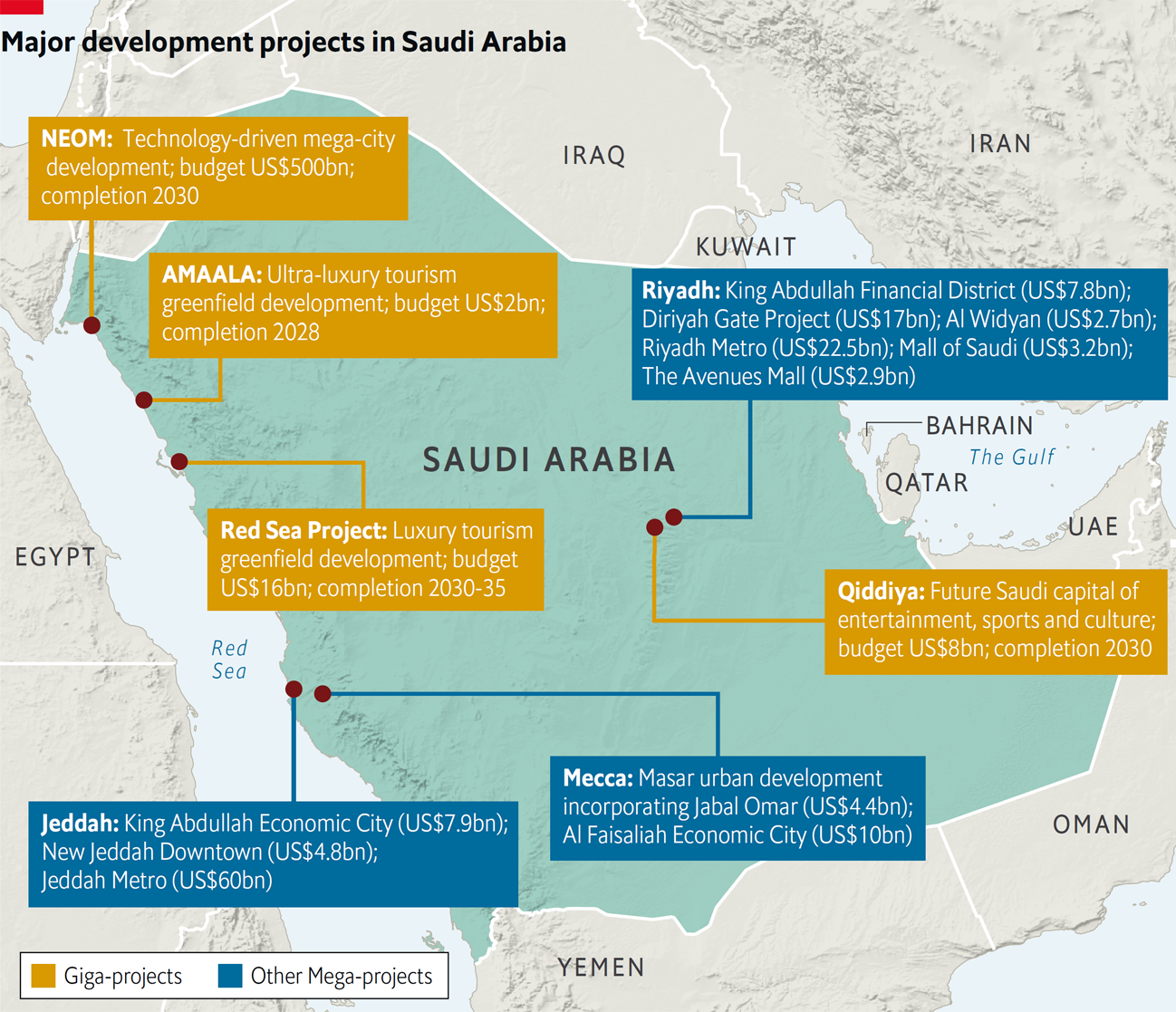
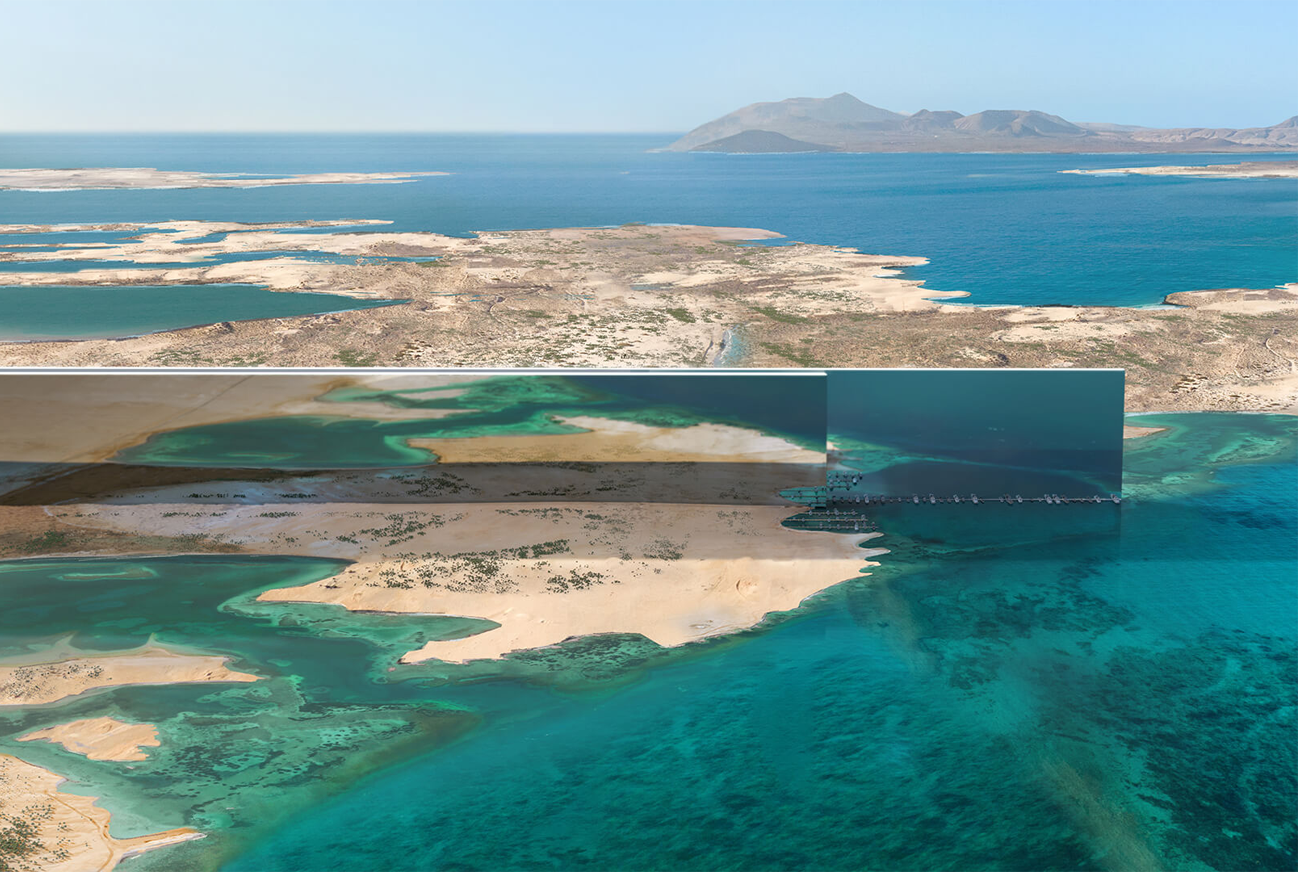
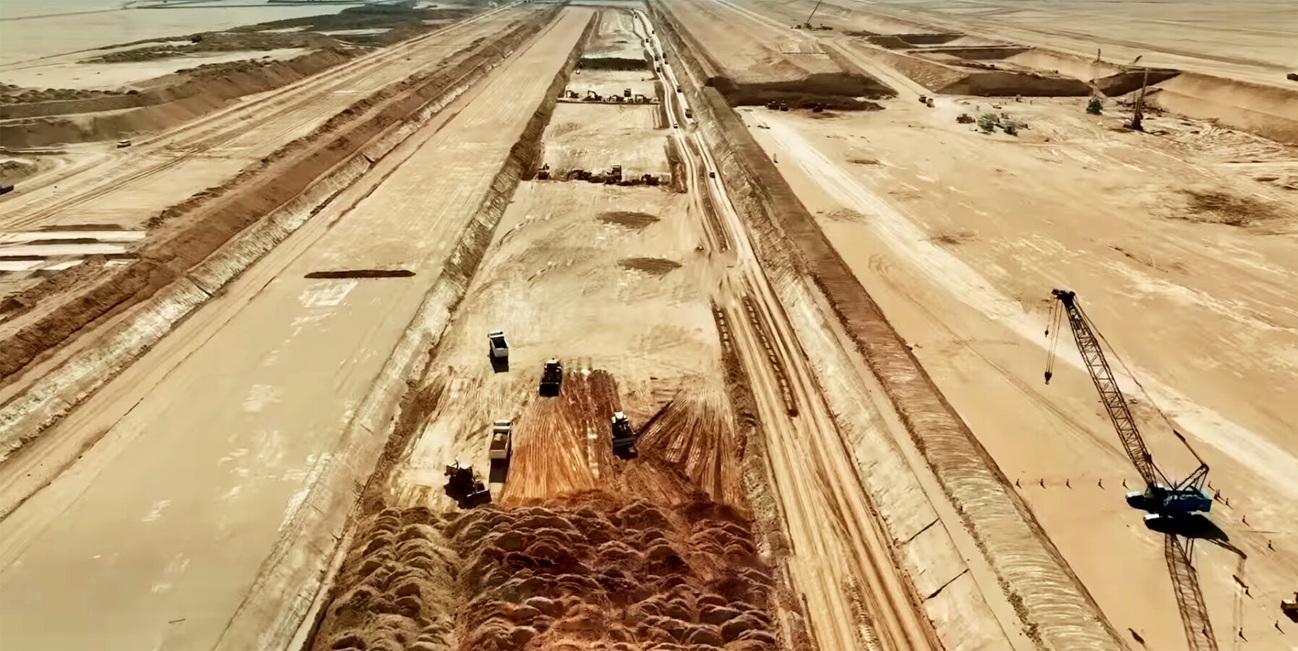
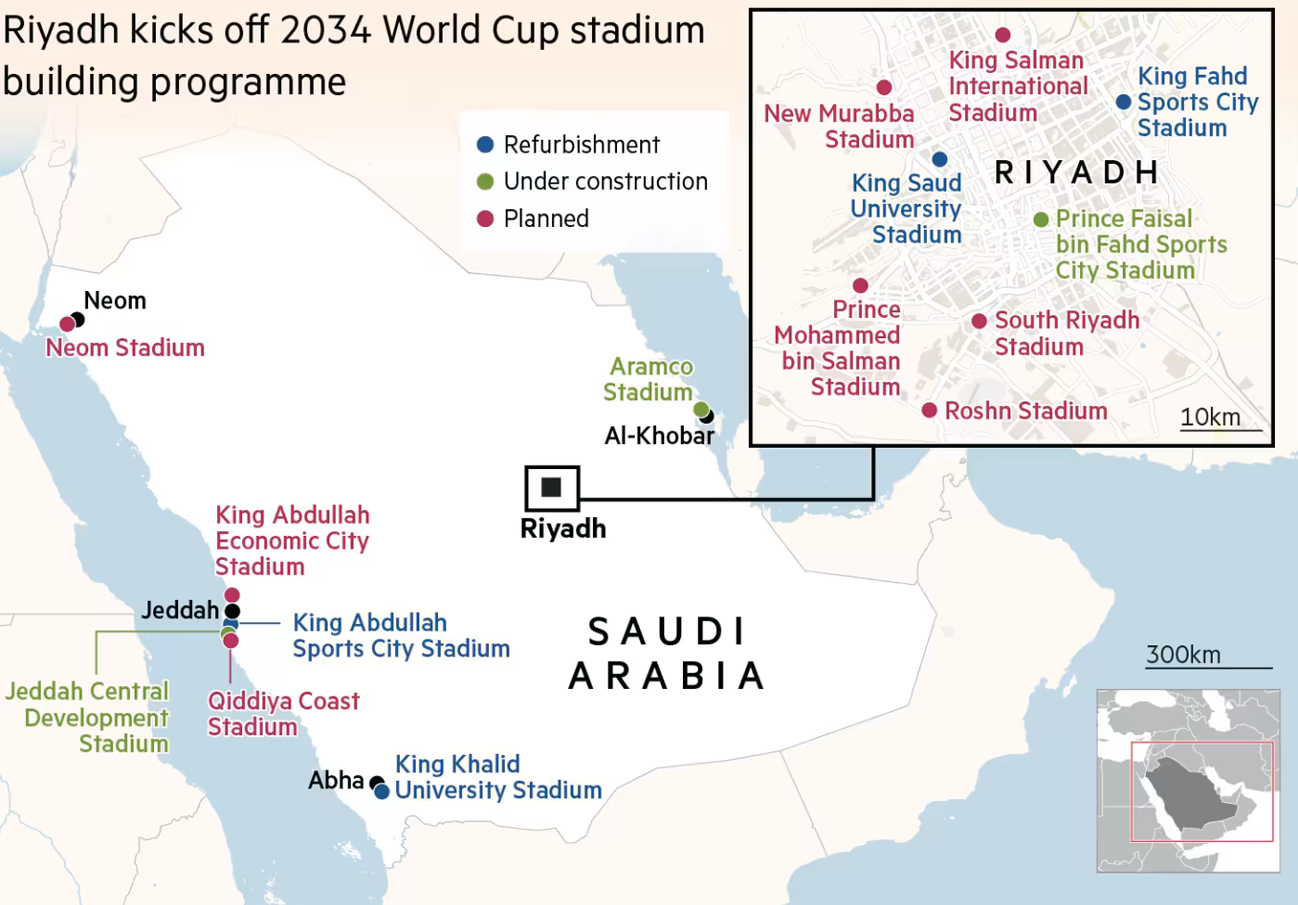
Accompanying the above graphic, The Economist Intelligence Unit writes, “Saudi Arabia has embarked on four transformative “giga projects” (including NEOM, a planned mega-city; and Qiddiya, a planned “entertainment city”) that represent major technology, tourism, real-estate, sport, cultural and entertainment developments aligned with Vision 2030 objectives. Saudi Arabia also intends to “develop national and international connectivity through ventures funded by a combination of state and foreign investment.”
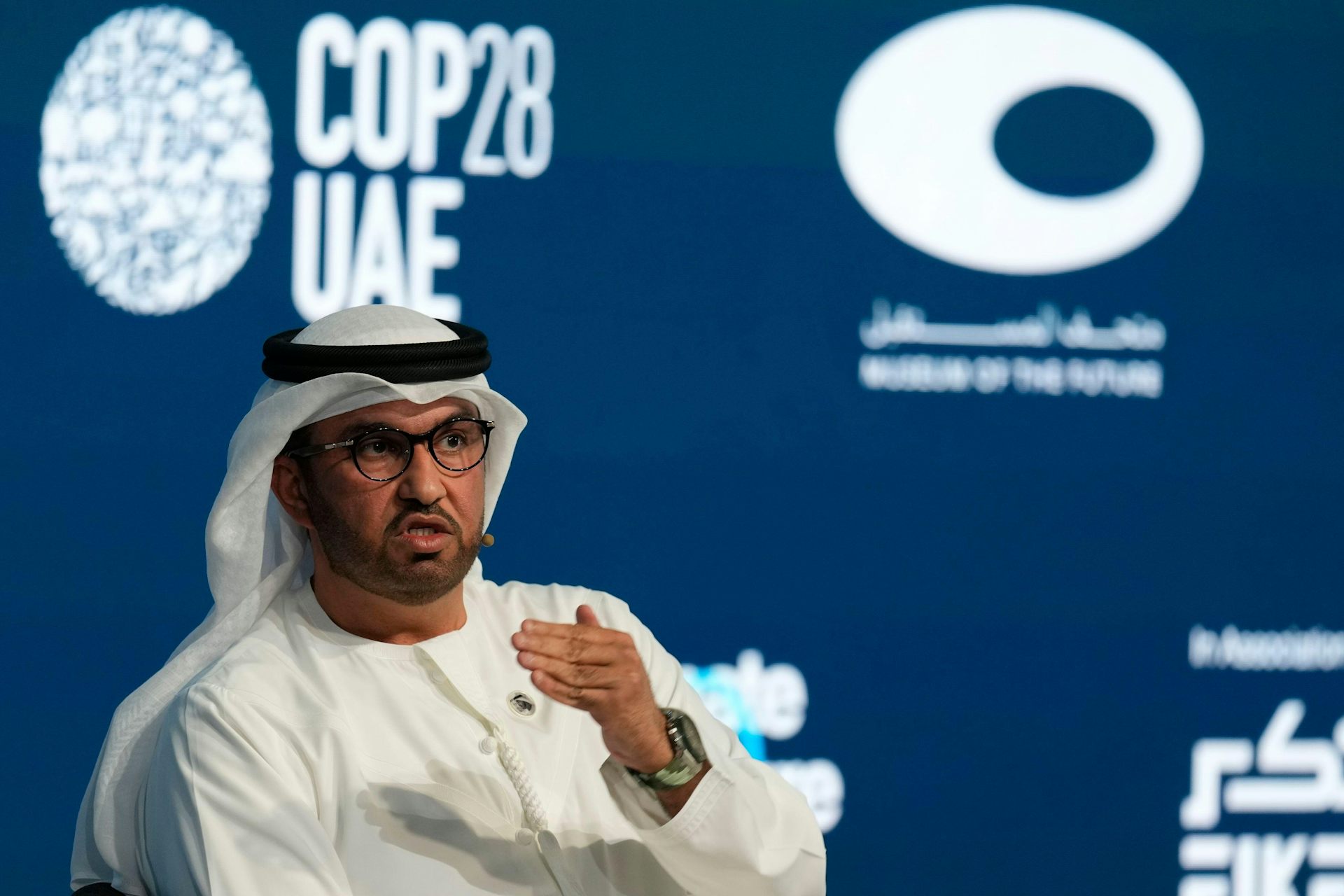
UAE state oil company CEO, Sultan Al Jaber. AP Photo/Kamran Jebreili
The United Arab Emirates (UAE), the world’s seventh largest oil producer, will host the 28th UN climate change summit (COP28) in Dubai from November 30 to December 12. Presiding over the conference will be the chief executive of the UAE state-owned oil company Adnoc, Sultan al-Jaber.
Given fossil fuels account for nearly 90% of the carbon dioxide emissions driving climate change, many have argued that there is a clear conflict of interest in having oil and gas producers at the helm of climate talks. The UAE is alleged to flare more gas than it reports and plans to increase oil production from 3.7 million barrels a day to 5 million by 2027.
Some contend that the oil and gas industry could throw the brake on greenhouse gas emissions by investing its vast revenues into plugging gas flares and injecting captured carbon underground. But independent assessments maintain that the industry will need to leave at least some of its commercially recoverable reserves permanently underground to limit global warming. No oil-exporting country but Colombia has yet indicated it will do this.
Dubai appears determined to undermine even this small victory. An investigation has released documents showing the UAE hosts planned to advise a Colombian minister that Adnoc “stands ready” to help the South American country develop its oil and gas reserves.
The UK invited ridicule by expanding its North Sea oil fields less than two years after urging the world to raise its climate ambitions as summit host. The UAE seems destined for a similar fate – before its talks have even begun.
Citizens are used to driving gas-guzzling cars with fuel priced well below international market rates and using air conditioning for much of the year thanks to utility subsidies. Visiting tourists and conference-goers have come to expect chilled shopping malls, swimming pools and lush golf greens that depend entirely on energy-hungry desalinated water.
Despite decades of policies aimed at diversifying the country’s economy away from oil, the UAE’s hydrocarbon sector makes up a quarter of GDP, half of the country’s exports and 80% of government revenues. Oil rent helps buy socioeconomic stability, for instance, by providing local people with public-sector sinecures.
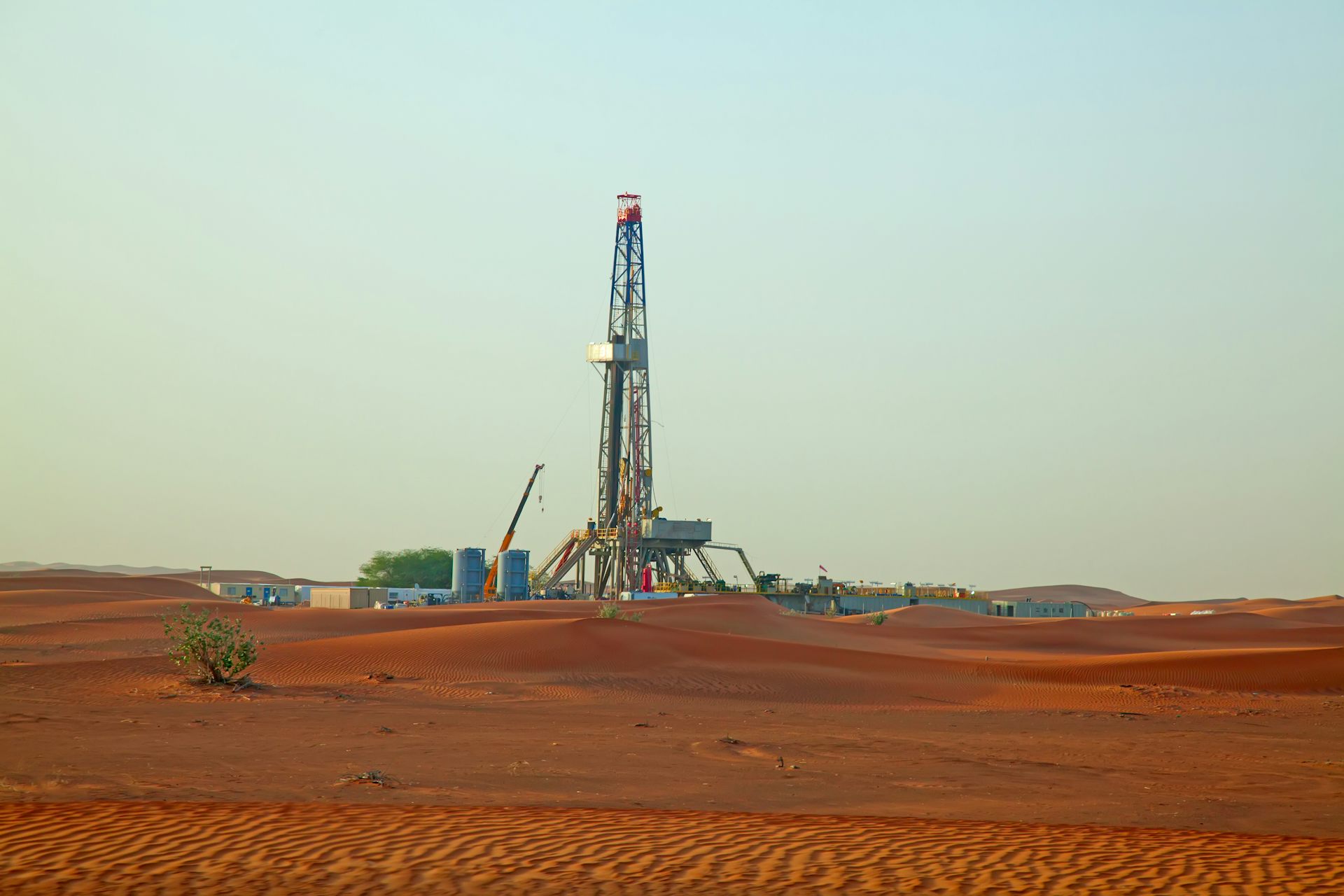
An oil field within the Arabian Desert, near Dubai. Fedor Selivanov/Shutterstock
This state of affairs is a central tenet of the Arabian Gulf social contract, in which citizens of the six gulf states mostly occupy bureaucratic public sector positions administering an oil-based economy with expatriate labour dominating the non-oil private sector.
Adnoc, along with the wider oil and gas industry, has invested in carbon sequestration and making hydrogen fuel from the byproducts of oil extraction. According to the Intergovernmental Panel on Climate Change (IPCC), such measures, even if fully implemented, will only have a small impact on greenhouse gas emissions.
The UAE was the first in the Middle East to ratify the Paris climate agreement and to commit to net zero emissions by 2050. With near limitless sunshine and substantial sovereign wealth, the UAE ranks 18th globally per capita and first among Opec countries for solar power capacity. Solar now meets around 4.5% of the UAE’s electricity demand and projects in the pipeline will see output rise from 23 gigawatts (GW) today to 50GW by 2031.
The Barakah nuclear power plant (the Arab world’s first) started generating electricity in 2020. While only meeting 1% of the country’s electricity demand, when fully operational in 2030, this may rise to 25%.
The oil sector is inherently capital-intensive, not labour-intensive, and so it cannot provide sufficient jobs for Emiratis. The UAE will need to transition to a knowledge-based economy with productive employment in sectors not linked to resource extraction.
In the UAE, sovereign wealth fund Mubadala is tasked with enabling this transition. It has invested in a variety of high-tech sectors, spanning commercial satellites to research and development in renewable energy.
But even if the UAE was to achieve net zero by some measure domestically, continuing to export oil internationally means it will be burned somewhere, and so the climate crisis will continue to grow.
Self-interest
Is disappointment a foregone conclusion in Dubai? Already one of the hottest places in the world, parts of the Middle East may be too hot to live within the next 50 years according to some predictions.
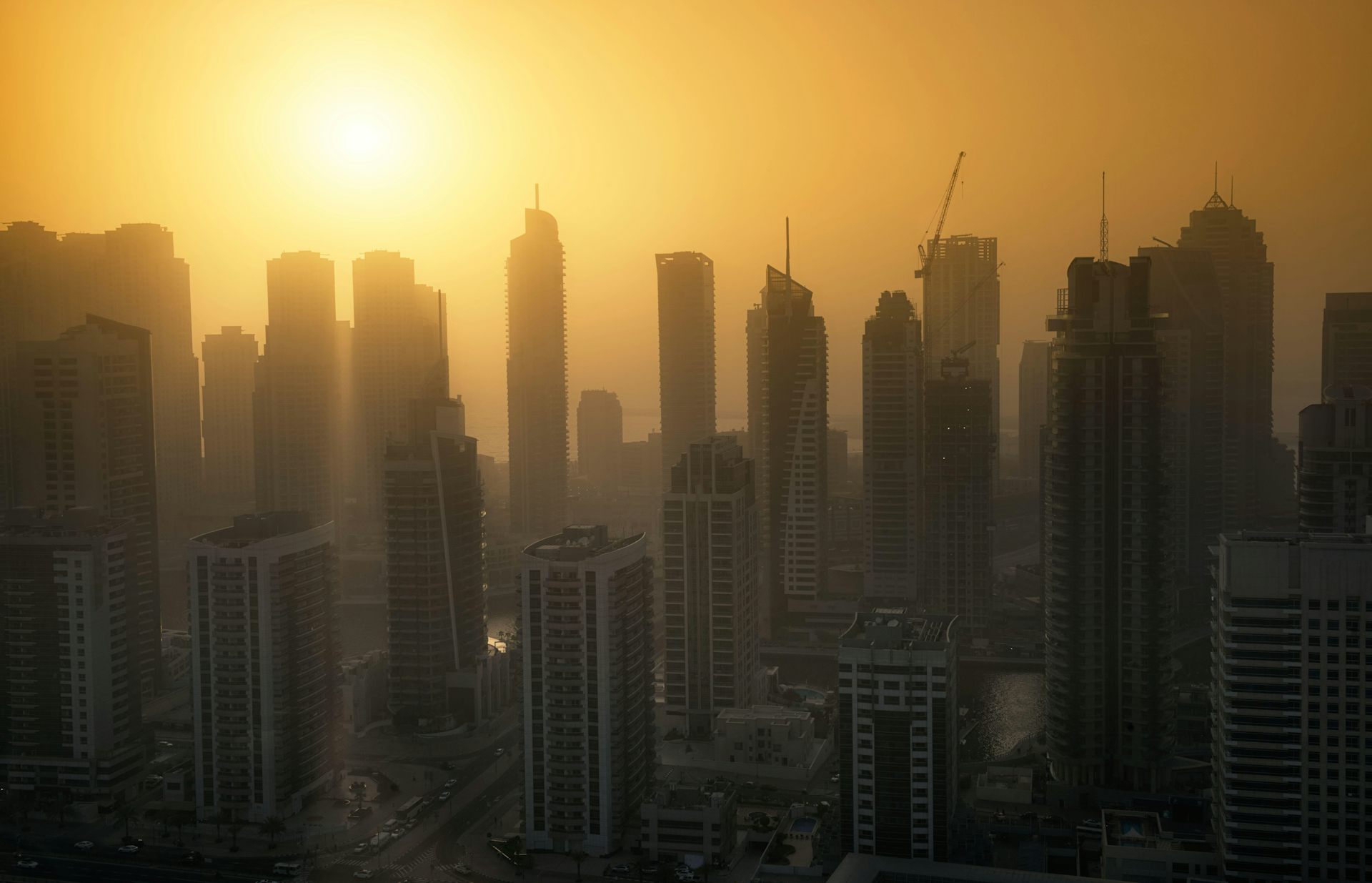
Dubai’s tourist economy will be difficult to sustain as the climate crisis intensifies. Andrew Deer/Alamy Stock Photo
Rising temperatures risk the UAE’s tourism and conference-hosting sectors, which have grown meteorically since the 1990s (third-degree burns and heatstrokes won’t attract international visitors). A show-stopping announcement to further its global leadership ambitions is not out of the question.
At some point, one of the major oil-exporting countries must announce plans to leave some of its commercially recoverable oil permanently untapped. COP28 provides an ideal platform. A participating country may make such a commitment with the caveat that it first needs to build infrastructure powered by renewable energy and overhaul its national oil company’s business model to one that supplies renewable energy, not fossil fuel, globally.
The UAE has the private capital and sovereign wealth required to build a post-oil economy. But will it risk being the first mover?
Writing in 2014, Fanar Haddad says, no other event—not even the Iranian Revolution of 1979—has had “as momentous and detrimental an effect on sectarian relations in the Middle East as the war on and occupation of Iraq in 2003” (p. 67). And lest we forget, that debacle was not about the spreading of democracy in any way, shape or form. As Ian Sinclair reminds us in an excellent piece (see: WMD? or actually oil) an October 2003 Gallup poll of Iraqis residing in Baghdad found a full one per cent (yes, 1%) agreed with the premise that the US/UK desire to establish democracy was the main motivating factor for the invasion, while “43 per cent of respondents said the invasion’s principal objective was Iraq’s oil reserves.”
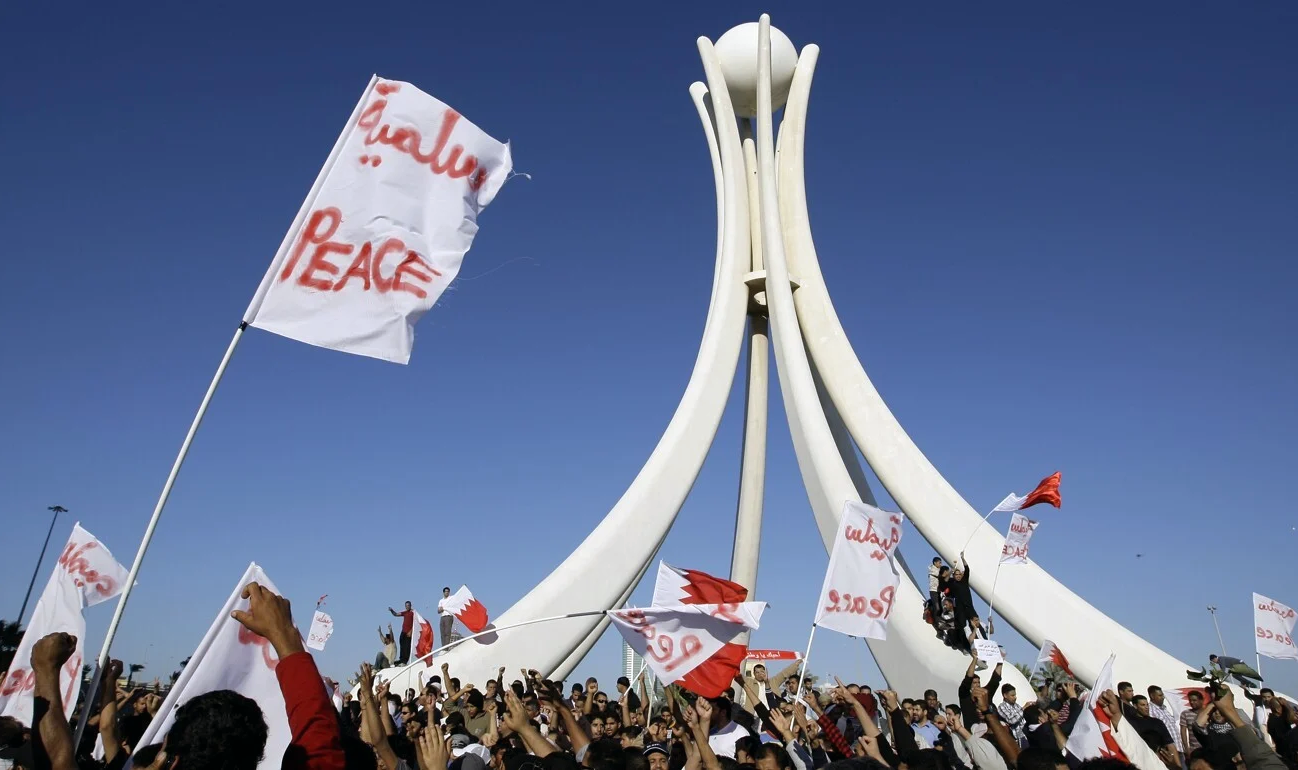
Matthiesen (2013) was in Bahrain in February 2011 when the Kingdom’s “Arab Spring” protests began, and records the initially peaceful character of the demonstrations, and not only peaceful but explicitly anti-sectarian (“neither Shia nor Sunni” the demonstrators chanted at the start). It is easy to forget now, as Jones (2015, p. 242) writes, “there was a spirit of optimism at that point, and many hoped Crown Prince Salman would successfully negotiate a compromise” (i.e., transition to a more accountable regime).
This opportunity evaporated within a month, on the 14th of March 2011, with the intervention of Saudi troops across the causeway. As Jones (2015) writes in his review of Matthiesen’s work, “it provides an account of Bahrain’s counter-revolution, the National Dialogue and the establishment of the Bahrain Independent Commission of Inquiry.” Matthiesen notes that the head of the commission had said, “you can’t say justice has been done when calling for Bahrain to be a republic gets you a life sentence and an officer who repeatedly fires on an unarmed man at close range gets seven years.”
Potter (2014) writes that in the wake of the Arab Spring, “in the Persian Gulf monarchies, there was a continuing standoff between Sunni and Shia in Bahrain and Saudi Arabia, and a widespread fear [be it imagined or tangible] of Iranian irredentism.” Jones (2015, p. 243) suggests that the central thesis of Matthiesen (213) is that some such monarchies have “deliberately stoked sectarianism, both as a means to fight the perceived Shia threat, as well as to divide and rule.” Proving intent is difficult acknowledges Jones; “Who can say whether leadership is foolish or wicked, or indeed both? But the outcome is the same.”
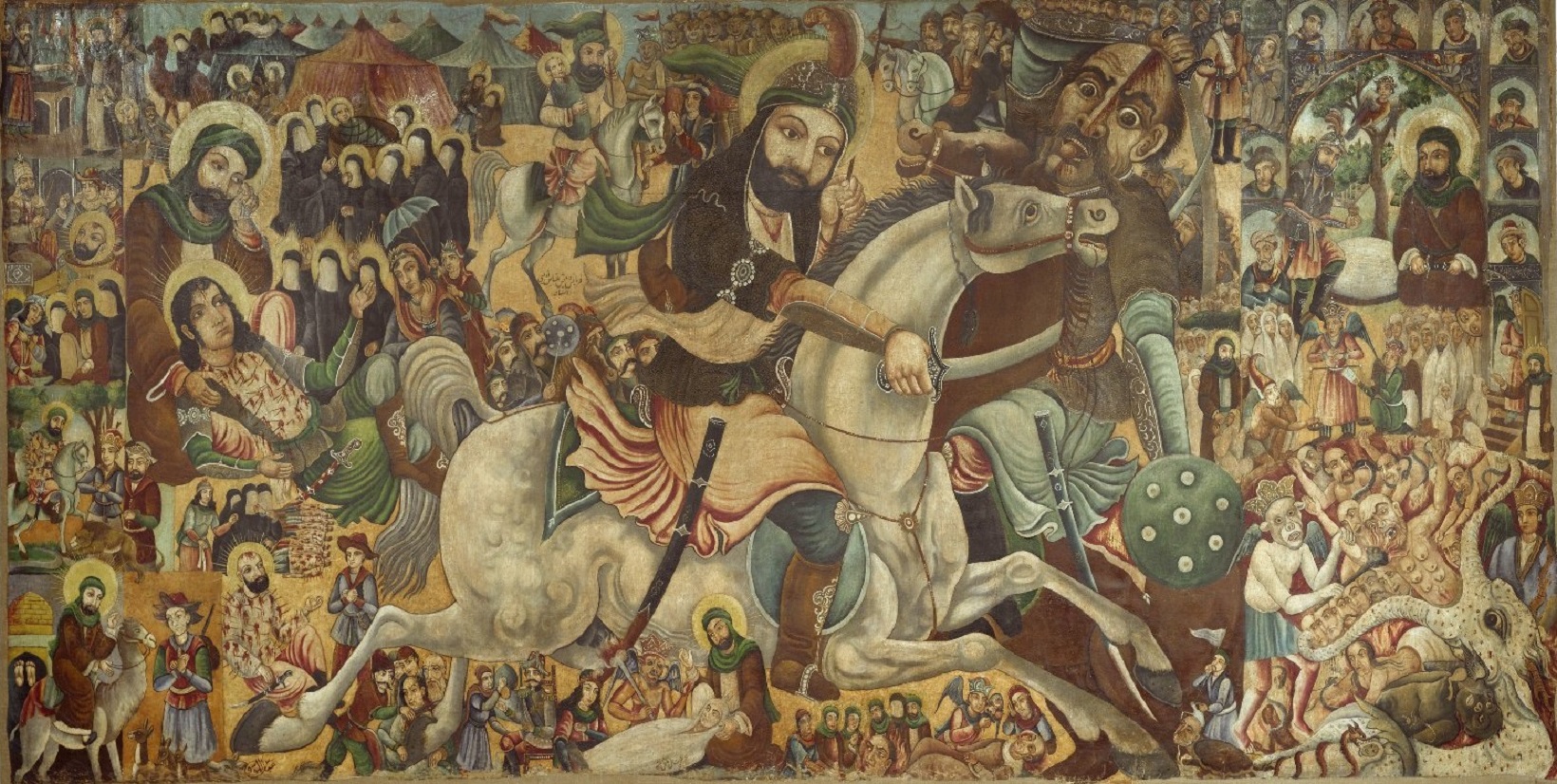
The schism (divide or split) between Sunni and Shia Islam emerged after the death of the Prophet Muhammad in 632, and disputes arose over who should shepherd the new and rapidly growing faith. Some believed that a new leader should be chosen by consensus; others thought that only the prophet’s descendants should become caliph. Muslims who wanted to select his successor, or Caliph, by following the traditional Arab custom (Sunna, ‘the way’) formed into a group known as Sunnis and elected Abu Bakr, a companion of Mohammed, to be the first caliph, or leader of the Islamic community. Others insisted the Prophet had designated his cousin and son-in-law Ali as his legitimate heir. This group was called Shia Ali, or ‘Party of Ali,’ (from which the word ‘Shia’ is now derived).
While the main responsibility of Sunni Caliphs was to maintain law and order in the Muslim realm, as descendants of the Prophet, Shia Imams (spiritual leaders) also provided religious guidance and were/are considered infallible — see, e.g., Axworthy (2017), Harney (2016) and Hubbard (2016). According to The Council on Foreign Relations (2023), Shias believe that Ali and his descendants are part of a divine order while Sunnis are opposed to political succession based on Mohammed’s bloodline.
Words matter
Framing the term “sectarianism” is fraught with both controversy and difficulty. It stems from the notion of a sect: a group with distinctive religious, political, or philosophical point of view and/or set of (ritualistic) practices. Most often the term has a religious connotation, such as a small group (minority) that has broken away from “orthodox” (mainstream) beliefs. According to Potter (2014, p. 2) Western writers typically, and mistakenly, characterise Sunnis as “orthodox” Muslims, and Shia as being “heterodox.” Sectarianism has come to have a negative connotation, denoting a group that sets itself off from society and thereby raises tensions. Haddad (2014, p. 67) notes that the term “sectarianism” does not have a definitive meaning, and prefers to view such groups in Iraq as “competing subnational mass-group identities.” It follows then that ‘sectarian’ identities, much like ethnic ones, are constantly changing and being both renegotiated (Smith, 2000) and reimagined (Anderson, 1983). I agree with the sentiments of Haddad (2014), until scholars are able to satisfactorily define “sectarianism,” a more coherent way of addressing the issue would be to use the term “sectarian” followed by the appropriate suffix: sectarian hate; sectarian unity; sectarian discrimination, and so forth.
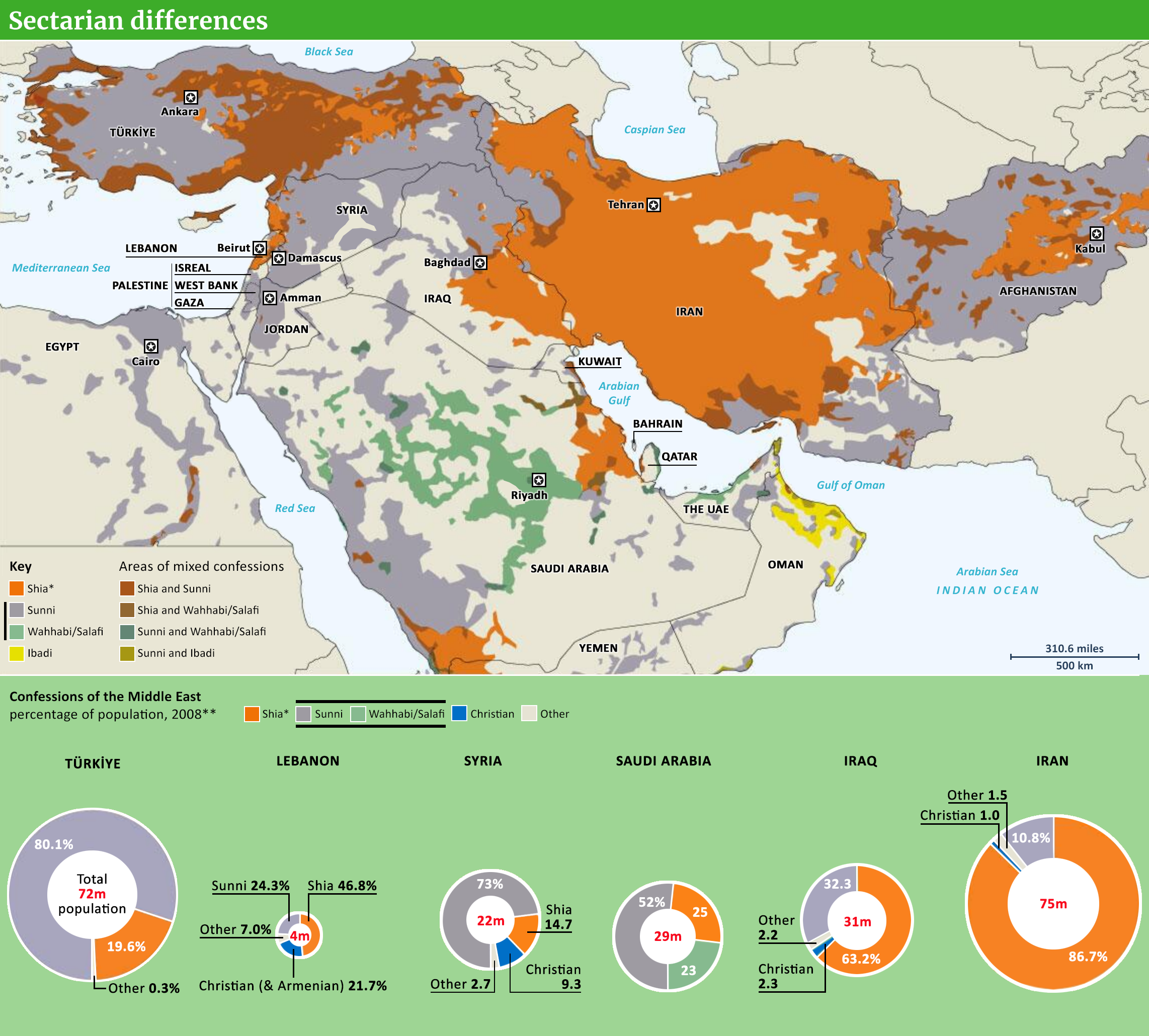
The map below gives details on the confessional divides on and around the Arabian peninsular. Although the data used to compile the map is dated the work is based on that carried out by Dr Michael Izady) and later used by The Financial Times of London is the latest as far as know. The Table that follows gives more recent figures but not geographical spread. As will become apparent when consulting the table and notes, the Association of Religion Data Archives (ARDA) relies heavily on the U.S. State Department’s annual International Religious Freedom Reports (that are submitted to the House of Congress annually in accordance with the International Religious Freedom Act of 1998). Those said reports paint a common theme: virtually all Gulf citizens are Muslim, but official demographics published by these countries do not delineate along confessional lines so, local media and think-tank reporting is relied upon.
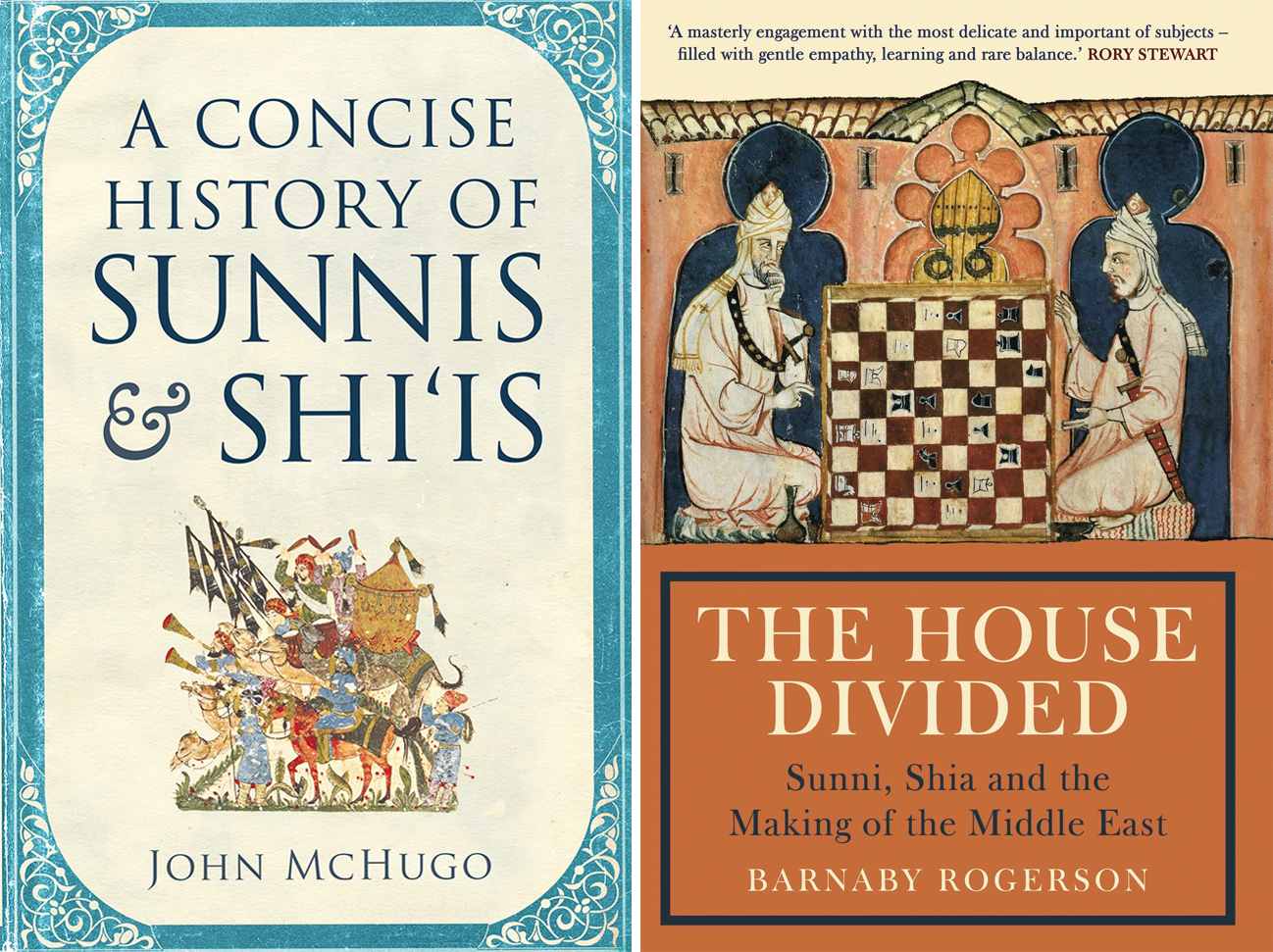
To gain a deeper understanding of the region’s “sectarian” politics the following are worth investigating: Potter (2014) and Matthiesen (2013).
* Includes gnostic Alawites & Alevis. ** Dated; see Table below. Expand map.
Table: Religions in 2023 (%)
Country
Sunni
Shia
Other
Bahrain a
28
54
18
Kuwait b
66
17
17
Oman c
47
7
46
Qatar d
66
12
22
Saudi Arabia e
81
9
10
The UAE f
67
7
26
Iran
17
81
1
Iraq
35
61
4
Jordan
93
2
5
Egypt
90
< 1
10
Yemen
44
55
1
a
The US state department’s 2023 IRF report on Bahrain estimates the total population to be approximately 1.5 million with Bahrainis numbering around 720,000 (June 2023 – compare with Arabian Gulf data). The Bahraini government does not publish statistics that delineate its the Shia and Sunni Muslim populations but, “estimates from NGOs and the Shia community state Shia Muslims represent a majority (55 to 70 per cent).”
b
The IRF Report on Kuwait The U.S. government estimates the total population at 3.2 million (midyear 2022). U.S. government figures also cite the Public Authority for Civil Information (PACI), a local government agency, which reports that the country’s total population was 4.8 million in 2023. As of June, PACI reported there were 1.5 million citizens and 3.3 million noncitizens. PACI estimates 74.7 percent of citizens and noncitizens are Muslims. The national census does not distinguish between Shia and Sunni Muslims. Nongovernmental organizations (NGOs) and the media estimate approximately 70 percent of citizens are Sunni Muslims, while the remaining 30 percent are Shia Muslims (including Ahmadi and Ismaili Muslims, whom the government counts as Shia).
c
The IRF Report on Oman states that around 41 per cent of the Sultanate’s population constitutes foreign guest workers. Regarding the national Omani citizens, it is estimated that 45 per cent are Sunni, 45 per cent are Ibadi and most of the remainder are Shia (like its neighbours, the Omani government does not directly publish religious confession breakdowns). Note that the ARDA percentages in the Table above differ from those provided by the IRF.
d
According to the IRF Report on Qatar, as of 2023 Qataris made up approximately 11 per cent of the country’s total population and that “most citizens are Sunni, and almost all others are Shia.”
e
The IRF Report on Saudi Arabia estimates that around 85 per cent of Saudis are Sunni. The remainder are Shia, but in the oil-rich Eastern provinces of the country, this latter group comprises a substantial fraction (see: Oil’s corruptive capacity).
f
The 2023 IRF Report on the UAE suggests that approximately 11 per cent of the country’s population are Emiratis, of whom more than 85 per cent are Sunni. Most of the remainder, according to the report are are Shia citizens, “who are concentrated in the Emirates of Dubai and Sharjah.”
The narrative of a Sunni-Shia war is so prevalent it is now accepted without challenge – but Abdul-Azim Ahmed argues it is misleading to the point of inaccuracy.
‘But what about the great divide that is currently ripping apart the Middle-East?’
The question was asked to me at the launch of an exhibition about Muslim and Jewish relations at Cardiff University. The questioner was an elderly gentleman, clearly an academic, who had just finished reading part of the exhibition. I asked him to clarify.
‘The Sunni and Shia divide, that tore Islam asunder from the earliest days after the Prophet up to today’ he explained. As we continued our conversation, I discovered that this Professor of Chemistry felt the exhibition was intellectually dishonest for not acknowledging the impact of the division.
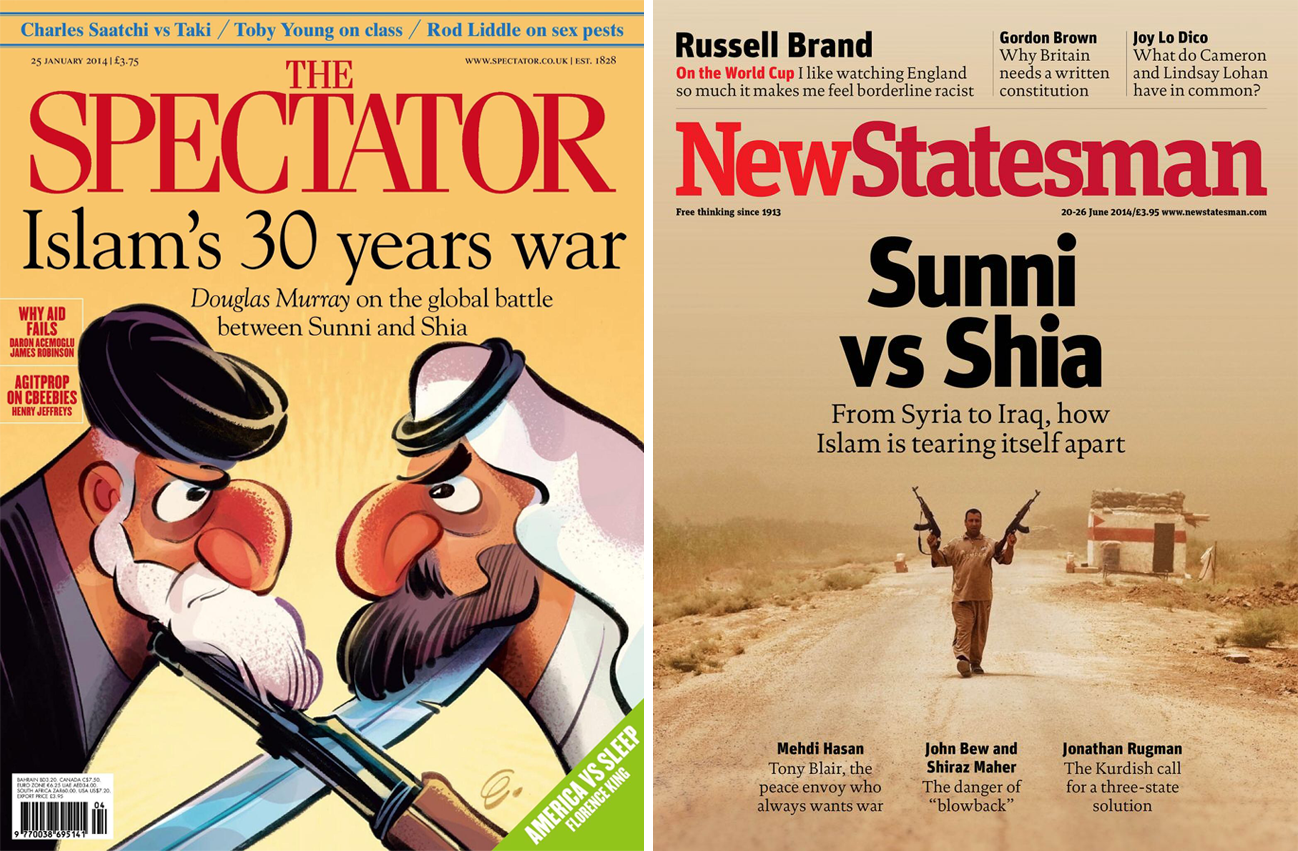
It is a view that is increasingly common. Namely, that much of the conflict in the Middle-East and to some extent North Africa, can be summarised as a struggle between warring factions within Islam -the Sunni majority and the Shia minority. You can read about it in respectable titles such as TIME magazine, The Spectator, even the New Statesman – all of whom covered it with front-page features, illustrating the conflict with stereotypical images of Arabs that tapped into centuries of Orientalist depictions of Muslims.
The Sunni versus Shia narrative has been featured in almost every newspaper I cared to check. Most recently, The Independent published a piece with the headline ‘The vicious schism between Sunni and Shia has been poisoning Islam for 1,400 years – and it’s getting worse’. The article of course mentioned the idea of the ‘Shia Crescent’ (a crescent-shaped area of land where there is a high Shia population) that is so ubiquitous in analysis it is almost cliché, not to mention being almost entirely useless as a tool for understanding geopolitical relationships.
The Sunni-Shia thesis essentially posits that a 7th century conflict of leadership amongst Muslims is the source of current Middle-Eastern unrest. The conflict led to two distinct theological groups emerging, the Ahlus Sunnah wal Jamaah (People of the Example of the Prophet and the Majority – conveniently shortened to ‘Sunni’) and the Shi’at Ali (the Party of Ali or ‘Shia’). The story goes that the two groups have been locked in a 1400 year conflict that has spanned continents, nation states and empires, and reaches its modern zenith in Syria, Bahrain, and the cold war between Iran and Saudi Arabia.
The problem with this thesis is that it is wrong. Not just partially wrong (as political analysis is, of course, always subject to interpretation) but so misleading, so inaccurate, and so detached from reality that it cannot be described as anything other than myth.
Even more problematic is that this myth has become so pervasive that gentlemen such as the professor I met consider it inconceivable to talk of Islam without talking of the Sunni-Shia conflict. Religious journalism has never been so dismally let down.
An Ancient Conflict?
The most common myth associated with the Sunni-Shia thesis is that Islam has been rent asunder by the sectarian conflict since its inception. This is simply reading history through solely modern eyes.
There was of course a dispute about religious authority following the death of the Prophet Muhammad. Historical specificities aside, the Sunni and Shia divide was largely a political one. There were no direct theological implications until the 10th and 11th centuries when orthodoxies began to settle and a Sunni Islam became distinct from a Shia Islam, led in separate directions as they developed distinct legal and interpretative traditions.
The lines have always been blurred between Sunnis and Shias, and they are so blurred that it is often difficult to make a distinction at all in the early centuries of Islam – for example, both Sunnis and Shias celebrate and claim for their own many of the same historical figures. Many of the Imams of Twelver Shiism are regarded as pious and orthodox by Sunni Muslims. Identities were fluid too, so that the revolution that put the Abbasid’s in power in the 9th century started as strongly Shia but ended as ardently Sunni.
Paul Vallely, writing in The Independent, argued that ‘the division between the two factions is older and deeper even than the tensions between Protestants and Catholics’. He is certainly correct that the division is older. But deeper? More significant? Certainly not historically, nor theologically. Sunni and Shia divergence in practice is really only intelligible to those very familiar with Islam in general.
There are differences in notions of orthopraxis (how and when to pray, for example). There are differences too in how scripture is assessed and interpreted – important yes, but historically, these have been the topic of scholarly dispute rather than military dispute. There have been times when Sunnis and Shias fought against each (the 7th century not being one of those times, importantly), but there have also been times when Shia have fought against Shia and Sunni have fought against Sunni.
The argument that Sunnis and Shias have been at each others throats since the 7th century is wrong in every way possible.
A War of Two Nations
So, if the claim of a Sunni-Shia conflict is historically incorrect, what about in the modern context?
What journalists and those who buy in to the Sunni-Shia narrative are doing is essentially replicating unquestioningly the rhetoric of two particular nation states. Saudi Arabia and Iran are perhaps the two most significant powers in the Middle-East, and since the Iranian Revolution in the 1970s, both have been vying for ascendency. Saudi Arabia especially has been exporting anti-Shia theology in a bid to delegitimise Iran and isolate it from other Muslim-majority nations.
Both nations recognise that amongst Muslims, any claim to legitimacy and authority to rule must be expressed in religious terms. Murtaza Hussain, a journalist at The Intercept, argues that Iran however, is less eager to push sectarian rhetoric than Saudi – ‘Iran’s statements are much more conciliatory because they know they can never achieve their goal of leading a largely Sunni Muslim world if they are openly sectarian’.
Conflict in the Middle-East is very much about resources and influence; it is of course however marked by religious rhetoric — rhetoric however that should rarely be taken at face value.
The Syrian Civil War
What about in nations such as Syria, where a Shia government is fighting against a Sunni populous? Surely here the claim of a Sunni-Shia conflict has merit?
Again the reality is more complicated. It was only in 1973 that modern Shias formally accepted Allawis (the religious sect to which the Assad family belong) as a branch of Shia-Islam. Musa al-Sadr, a senior Shia cleric in Lebanon, issued the fatwa, which brought centuries of ambiguity to an end. Until then — the Allawis were an unknown quantity. The religion was certainly influenced by Islam, but much else too, and Orthodox Sunnis and Shias both were sceptical of the high secretive tradition. Al-Sadr’s fatwa was as much motivated by politics as by piety — but it should underscore the fractured nature of religion and power in the Middle-East — a fracturing that is most clear in Syria today.
Journalists who consistently frame the conflict in sectarian terms also add to a pressure for religious groups to adhere to a particular political standpoint.
‘It’s called legitimacy by blackmail’ says James Gelvin, an academic and author who has researched the Middle East and Arab Spring. He explains to me the relevance of a Shia identity for Syria’s Assad Regime; ‘What the Syrian government has done is make itself stable by identifying the government with a particular sect, what they have done is forced other members of that sect into support of the government.’ It is a common tactic not only in Syria but in Bahrain also; ‘What that means of course is that the government tells minority communities, ‘if you do not support us, you’re dead, the majority will do something to you’’.
When journalists in the West repeat the ‘legitimacy by blackmail’ narrative in newspaper reports, they make the job of important bridge-builders, such as an Allawite Shia who doesn’t support the Assad regime, even more dangerous.
The same tatic is used by cheerleaders of the conflict, framing the Syrian Civil War as one between to Sunnis and Shias so as to garner theological support from certain quarters or to delegitimise claims of authority in other quarters. Muhammad Reza Tajiri, a Shia scholar in the United Kingdom, believes ‘the Syrian conflict certainly did not start on sectarian grounds, but as a result of opportunism from ‘scholars’ of both sides, the sectarian ideological issue is now inseparable from the conflict’.
Misleading Analysis
But it is clear that sectarianism is an element of the conflict; a devil’s advocate may argue that describing the conflict as Sunni-versus-Shia isn’t inaccurate. To truly appreciate how misleading it can be, try the following thought experiment.
Imagine a newspaper in the Middle-East, let’s say reporting in the 1990s. It is covering The Troubles of the UK and Ireland, specifically the Manchester Bombing of 1996. The headline of this piece is ‘The vicious schism between Protestant and Catholic has been poisoning Christianity for 500 years – and it’s getting worse’.
You begin reading the first few paragraphs of this article which professes to trace the history of the conflict between Britain and Ireland. It then locates the source of this conflict as beginning with Martin Luther nailing the Ninety-Five Theses to the door of Castle Church in Wittenburg.
The article concludes that the only way to resolve the dispute over Northern Ireland is sitting the Archbishop of Canterbury down with the Archbishop of Westminster to hammer out points of theological divergence, perhaps beginning with Transubstantiation. Only then, the author argues, can we hope for peace in Western Europe.
This bizarre article would never address the core of the issue, nor the problems being faced, nor offer any real solutions or clear ways forward. In fact, by choosing and forcing the narrative of a Christian sectarian conflict, it obfuscates the issue so drastically that it is useless.
It is the same with the Middle-East. Sectarianism is an aspect of Syria, but should the Muslim world come to some consensus about who should have been leader after the Prophet Muhammad, the difference at the centre of the original Sunni-Shia divide, the conflict in Syria would not cease.
Despite this, it isn’t uncommon to find articles talking about Syria, Bahrain or Pakistan, beginning with a discussion about 7th century Islam and disputes of who should be the next leader, Abu Bakr or Ali. Clearly this is neither insightful nor informed.
Alternative Understandings
If sectarianism is the wrong paradigm by which to understand conflicts in the Middle-East? How should they be understood?
‘The region has been economically stagnant’ believes James Gelvin, who has written extensively on the economic and social factors that led to the Arab Spring; ‘there is a largely young demographic, an unemployed youth, living amongst regimes that are incredibly oppressive’. Murtaza Hussain agrees that the problem is a combination of ‘economic failure’ and ‘identity politics’.
There is an emphasis sometimes put on the Saudi Arabia-versus-Iran cold war, but there are other pressures too. Most recently, the fracturing of relationships highlights how Qatar has emerged as a major player in the region. Saudi Arabia and Qatar have increasingly been hyping up tensions and rhetoric (a very Sunni-versus-Sunni conflict, to use the sectarian lens). Turkey too has very carefully developed links with post-Arab-Spring states, positioning itself as a potential moral voice for Muslims globally. The United States, which supports the Egyptian army with $3 billion annually, and Russia, which is propping up a beleaguered Assad Regime in Syria, also have deep interests in the region.
Conflicts are messy. Tony Blair’s speech in late April showed this most clearly. He advocated supporting intervention in Syria, but creating ties with Russia to fight Islamist threats. Yet Russia is supporting Assad, the same regime fighting the rebels Blair suggests offering support. His policy would quite literally force Britain and other Western nations to support two sides of the same war.
If experienced statesman like Blair can’t provide a coherent narrative without stumbling over themselves, we should certainly be wary of newspapers that simplify the problems of the Middle-East using the Sunni-versus-Shia schism.
Perhaps best to conclude then with James Gelvin:-
“In terms of the Middle East, the straw people always grasp at first is religion. They don’t do that in the case of the West. If there is a problem, it’s not a national problem, it’s not an economic problem, it has to be nailed on religion. It’s facile, simplistic and lazy analysis.”
References
Anderson, B. (1983). Imagined Communities: Reflections on the Origin and Spread of Nationalism. Verso Books.
Haddad, F. (2014). Secterian relations and sunni identity on post-civil war Iraq. In L. G. Potter (Ed.), Sectarian Politics in the Persian Gulf (pp. 67–115). Oxford University Press.
Louër, L. (2014). The State and Sectarian Identities in the Persian Gulf Monarchies: Bahrain, Saudi Arabia, and Kuwait in Comparative Perspective. In L. G. Potter (Ed.), Sectarian Politics in the Persian Gulf (pp. 117–143). Oxford University Press.
Jones, J. (2016). Sectarian Gulf: Bahrain, Saudi Arabia and the Arab Spring That Wasn’t [Book Review] Journal of Islamic studies, 27(2), 242–243. https://doi.org/10.1093/jis/etv108
Matthiesen, T. (2013). Sectarian Gulf: Bahrain, Saudi Arabia, and the Arab Spring That Wasn’t. Stanford University Press.
Potter, L. G. (Ed.) (2014). Sectarian Politics in the Persian Gulf. Oxford University Press.
Smith, A. D. (2000). The Nation in History: Historiographical Debates about Ethnicity and Nationalism. University Press of New England.
Why do the US and Britain still claim the invasion of Iraq was to spread democracy?
The hostility towards elections and democracy by the US-British military administration that brutally overran the nation in 2003 was well documented at the time — as was the mass movement for free elections, writes
A little late to the party, I recently watched Once Upon A Time In Iraq, the BBC’s 2020 five-part documentary series about the US-British invasion and occupation of the Middle East nation.
During the episode about the capture of Iraqi president Saddam Hussein in December 2003, the narrator noted: “Though Iraq was still governed by the [US-led] coalition, the intention was to hold democratic elections as soon as possible.”
This fits with the common understanding of the Iraq War amongst the media, academic and political elites. For example, speaking on the BBC News at 10 in 2005, correspondent Paul Wood stated: “The coalition came to Iraq in the first place to bring democracy and human rights.”
Likewise, writing in the Guardian in 2013, the esteemed University of Cambridge Professor David Runciman claimed: “The wars fought after 2001 in Afghanistan and Iraq were designed… to spread the merits of democracy.”
No doubt similarly benign framing of the West’s intentions and actions will be repeated as we approach the 20th anniversary of the invasion on March 20 2003.
But is it true? As always it is essential to compare the narrative pumped out by corporate and state-affiliated media with the historical record.
We know that soon after US-led forces had taken control of the country, Iraqis began holding local elections. However, in June 2003, the Washington Post reported “US military commanders have ordered a halt to local elections and self-rule in provincial cities and towns across Iraq, choosing instead to install their own handpicked mayors and administrators, many of whom are former Iraqi military leaders.”
The report goes on to quote Paul Bremer, the chief US administrator in Iraq: “I’m not opposed to [self-rule], but I want to do it in a way that takes care of our concerns… in a postwar situation like this, if you start holding elections… it’s often the best-organised who win, and the best-organised right now are the former Baathists and to some extent the Islamists.”
On the national level, Professor Toby Dodge, who advised US General David Petraeus in Iraq, notes one of the first decisions Bremer made, after he arrived in Baghdad in May 2003, “was to delay moves towards delegating responsibility to a leadership council” composed of exiled politicians.
Writing in his 2005 book, Iraq’s Future, the establishment-friendly British academic goes on to explain “this careful, incremental but largely undemocratic approach was set aside with the arrival of UN special representative for Iraq, Vieira de Mello” who “persuaded Bremer that a governing body of Iraqis should be set up to act as a repository of Iraqi sovereignty.”
Accordingly, on July 13 2003 the Iraqi Governing Council (IGC) was set up. Dodge notes the membership “was chosen by Bremer after extended negotiations between the CPA [the US Coalition Provisional Authority], Vieira de Mello and the seven dominant, formerly exiled parties.” The IGC would “establish a constitutional process,” Bremer said at the time.
However, the Americans had a serious problem on their hands. In late June 2003 the most senior Shia religious leader in Iraq, Grand Ayatollah Ali al-Sistani, issued a fatwa (a religious edict) condemning the US plans as “fundamentally unacceptable.”
“The occupation officials do not enjoy the authority to appoint the members of a council that would write the constitution,” he said. Instead, he called for a general election “so that every eligible Iraqi can choose someone to represent him at the constitutional convention that will write the constitution” which would then be put to a public referendum.
“With no way around the fatwa, and with escalating American casualties creating pressure on President Bush,” the Washington Post reported in November 2003 that Bremer “dumped his original plan in favour of an arrangement that would bestow sovereignty on a provisional government before a constitution is drafted.”
This new plan, known as the November 15 Agreement, was based on a complex process of caucuses. A 2005 briefing from peace group Justice Not Vengeance (JNV) explained just how anti-democratic the proposal was: “US-appointed politicians would select a committee in each province which would select a group of politically acceptable local worthies, which in turn would select a representative… to go forward to the national assembly” which would “then be allowed to elect a provisional government.”
In response, Sistani made another public intervention, repeating his demand that direct elections — not a system of regional caucuses — should select a transitional government. After the US refused to concede, the Shia clerical establishment escalated their pro-democracy campaign, organising street demonstrations in January 2004.
100,000 people protested in Baghdad and 30,000 in Basra, with news reports recording crowds chanting: “Yes, yes to elections, no, no to occupation” and banners with slogans such as “we refuse any constitution that is not elected by the Iraqi people.”
Under pressure, the US relented, agreeing in March 2004 to hold national elections in January 2005 to a Transitional National Assembly which was mandated to draft a new constitution.
The campaigning group Voices In The Wilderness UK summarised events in a 2004 briefing: “Since the invasion, the US has consistently stalled on one-person-one-vote elections” seeking instead to “put democracy on hold until it can be safely managed,” as Salim Lone, director of communications for the UN in Iraq until autumn 2003, wrote in April 2004.
Why? “An elected government that reflected Iraqi popular [opinion] would kick US troops out of the country and is unlikely to be sufficiently amenable to the interests of Western oil companies or take an ‘acceptable’ position on the Israel-Palestine conflict,” Voices In The Wilderness UK explained.
For example, a secret 2005 nationwide poll of Iraqis conducted by the UK Ministry of Defence found 82 per cent “strongly opposed” to the presence of the US-led coalition forces, with 45 per cent of respondents saying they believed attacks against British and American troops were justified.
It is worth pausing briefly to consider two aspects of the struggle for democracy in Iraq. First, the Sistani-led movement in Iraq was, as US dissident intellectual Noam Chomsky argued in 2005, “One of the major triumphs of non-violent resistance that I know of.”
And second, it was a senior Iraqi Shia cleric who championed democratic elections in the face of strong opposition from the US — the “heartland of democracy,” according to the Financial Times’s Martin Wolf.
It is also worth remembering, as activist group JNV noted in 2005, that president George W Bush’s ultimatum days before the invasion was simply that “Saddam Hussein and his sons must leave Iraq within 48 hours.” This was about “encouraging a last-minute coup more than the Iraqi leader’s departure from Baghdad,” the Financial Times reported at the time. In short, the US-British plan was not free elections via “regime change” but “regime stabilisation, leadership change,” JNV argued.
This resonates with the analysis of Middle East expert Jane Kinninmont. Addressing the argument the West invaded Iraq to spread democracy, in a 2013 Chatham House report she argued: “This is asserted despite the long history of Anglo-American great-power involvement in the Middle East, which has, for the most part, not involved an effort to democratise the region.”
In reality “the general trend has been to either support authoritarian rulers who were already in place or to participate in the active consolidation of authoritarian rule… as long as these rulers have been seen as supporting Western interests more than popularly elected governments would.”
This thesis is not short of shameful examples — from the West’s enduring support for the Gulf monarchies in Saudi Arabia, Bahrain, the UAE, Oman, Qatar and Kuwait, to the strong backing given to Ben Ali in Tunisia and Hosni Mubarak in Egypt before both dictators were overthrown in 2011.
Back to Iraq: though far from perfect, national elections have taken place since 2003. But while the US has been quick to take the credit, the evidence shows any democratic gains won in Iraq in the immediate years after the invasion were made despite, not because of, the US and their British lackey.
Indeed, an October 2003 Gallup poll of Baghdad residents makes instructive reading. Fully 1 per cent of respondents agreed with the BBC and Runciman that a desire to establish democracy was the main intention of the US invasion. In contrast, 43 per cent of respondents said the invasion’s principal objective was Iraq’s oil reserves.
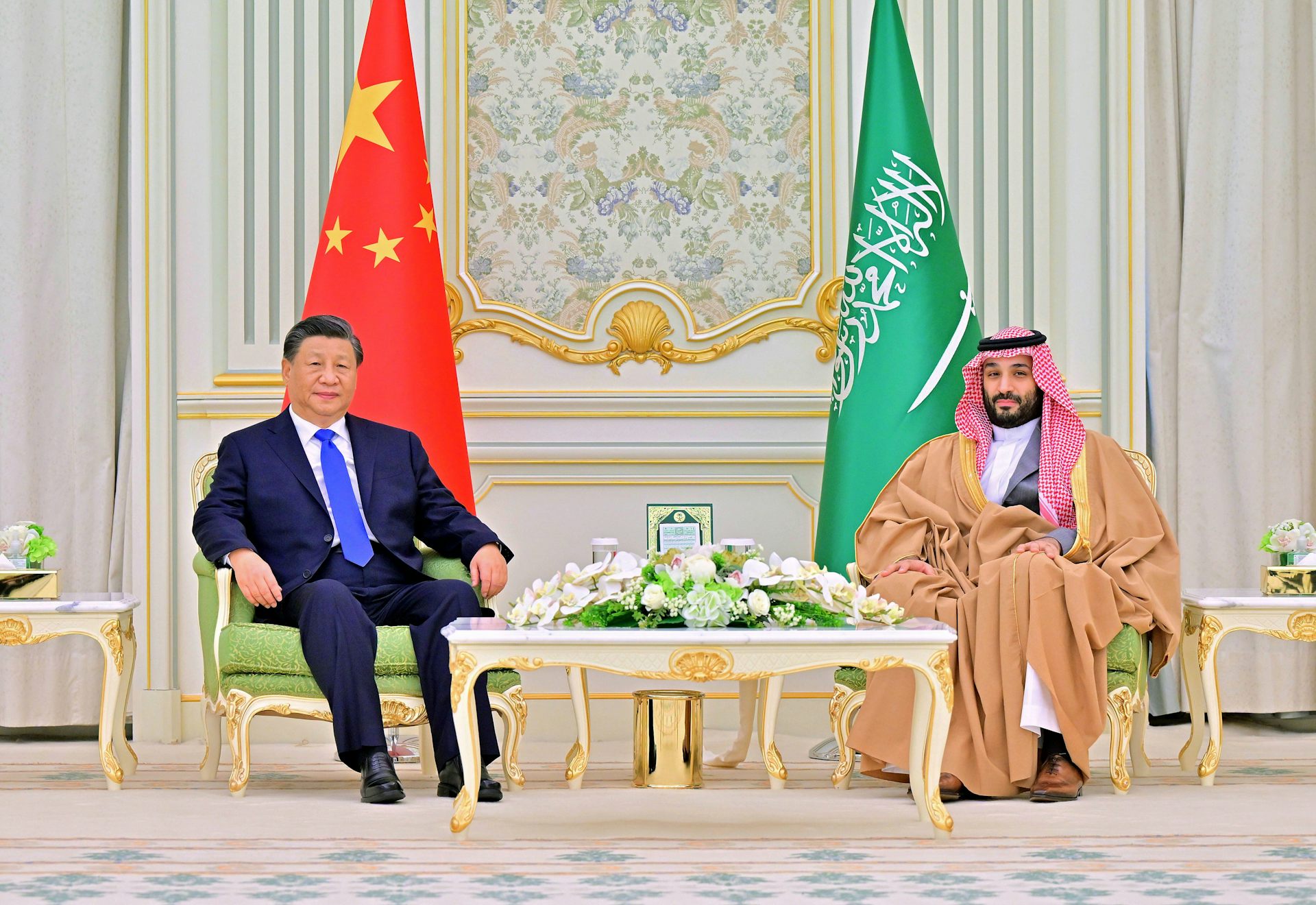
President Xi Jinping with Saudi Crown Prince Mohammed bin Salman Al Saud in December of 2022. Xinhua/Alamy Stock Photo
At the end of November 2022, UK prime minister Rishi Sunak announced that the “golden era” between Great Britain and China was over. China may not have been too bothered by this news however, and has been busy making influential friends elsewhere.
In early December, Chinese president Xi Jinping met with the Gulf Cooperation Council (GCC) – a group made up of Bahrain, Kuwait, Oman, Qatar, Saudi Arabia and the United Arab Emirates – to discuss trade and investment. Also on the agenda were talks on forging closer political ties and a deeper security relationship.
This summit in Saudi Arabia was the latest step in what our research shows is an increasingly close relationship between China and the Gulf states. Economic ties have been growing consistently for several decades (largely at the expense of trade with the US and the EU) and are specifically suited to their respective needs.
Simply put, China needs oil, while the Gulf needs to import manufactured goods including household items, textiles, electrical products and cars.
China’s pronounced growth in recent decades has been especially significant for the oil rich Gulf state economies. Between 1980 and 2019, their exports to China grew at an annual rate of 17.1%. In 2021, 40% of China’s crude oil imports came from the Gulf – more than any other country or regional group, with 17% from Saudi Arabia alone.
China has been using over 14 million barrels of oil a day since 2019. Nate Samui/Shutterstock
China has benefited from increasing demand for its manufactured products, with exports to the Gulf growing at an annual rate of 11.7% over the last decade. It overtook the US in 2008 and then the EU in 2020 to become the Gulf’s most important source of imports.
These are good customers for China to have. The Gulf economies are expected to grow by around 5.9% in 2022 (compared with a lacklustre 2.5% predicted growth in the US and EU) and offer attractive opportunities for China’s export-orientated economy. It is likely that the fast-tracking of a free trade agreement was high on the summit’s agenda in early December.
Strong ties
The Gulf’s increased reliance on trade with China has been accompanied by a reduction in its appetite to follow the west’s political and cultural lead.
As a group, it was supportive of the west’s military action in Iraq for example, and the broader fight against Islamic State. But more recently, the Gulf notably refused to support the west in condemning Russia’s invasion of Ukraine. It also threatened Netflix with legal action for “promoting homosexuality”, while Qatar has been actively banning rainbow flags supporting sexual diversity at the FIFA men’s World Cup.
So Xi’s visit to Saudi Arabia was well timed to illustrate a strengthening of this important partnership. And to the extent that anything can be forecast, a deepening of the Gulf-China trade relationship seems likely. On the political front, however, developments are less easy to predict.
China is seeking to safeguard its interests in the Middle East in light of the Belt and Road initiative, its ambitious transcontinental infrastructure and investment project.
But how much further might the Gulf states be prepared to sacrifice their longstanding security pacts with western powers (forged in the aftermath of the second world war) in order to seek new ones with the likes of Beijing? Currently, America has military bases (or stations) in all six Gulf countries, but it is well documented that the GCC is seeking ways to diversify its self-perceived over-reliance on the US as its primary guarantor of security (a sentiment within the bloc that was pronounced while Obama was president, less so with Trump, but on the rise again with Biden).
In the coming period, the GCC will need to decide which socioeconomic path to pursue in the post-oil era where AI-augmented, knowledge-based economies will set the pace. In choosing strategic ties beyond trade alone, the Gulf states must ask whether the creativity and innovative potential of their populations will be best served by allegiances to governments which are authoritarian, or accountable.
“In the desert I had found a freedom unattainable in civilization; a life unhampered by possessions.”
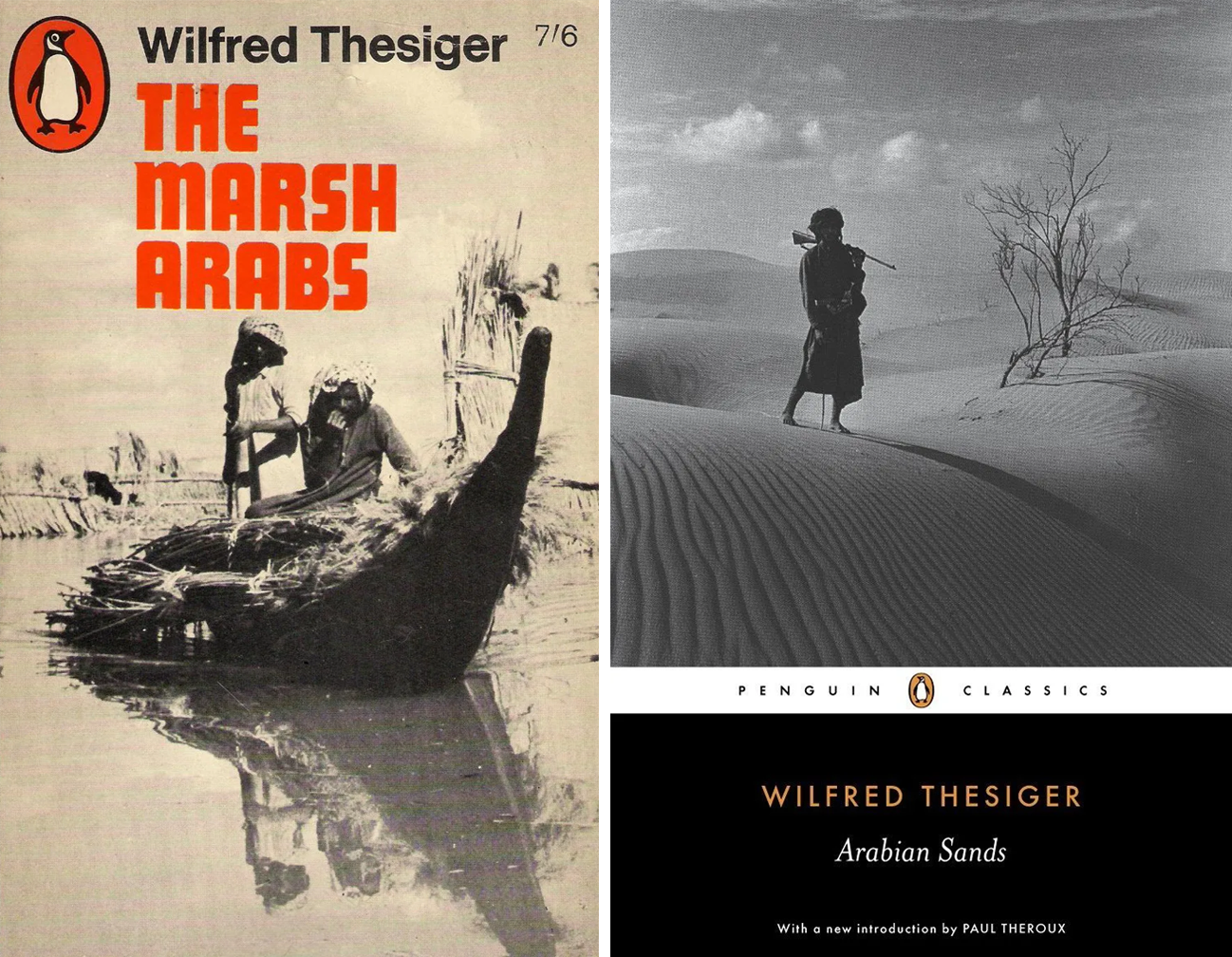
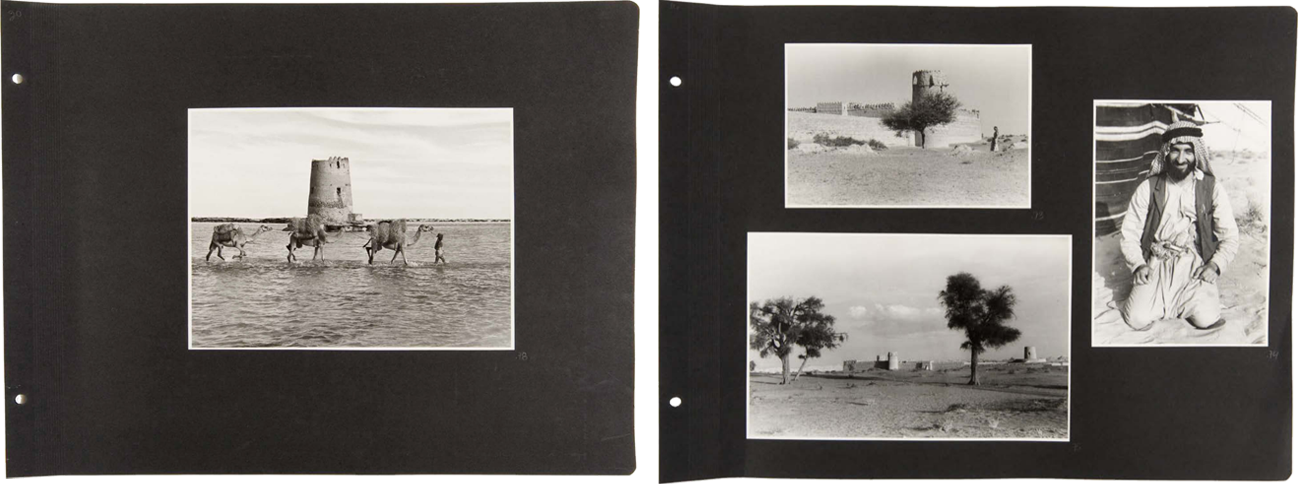
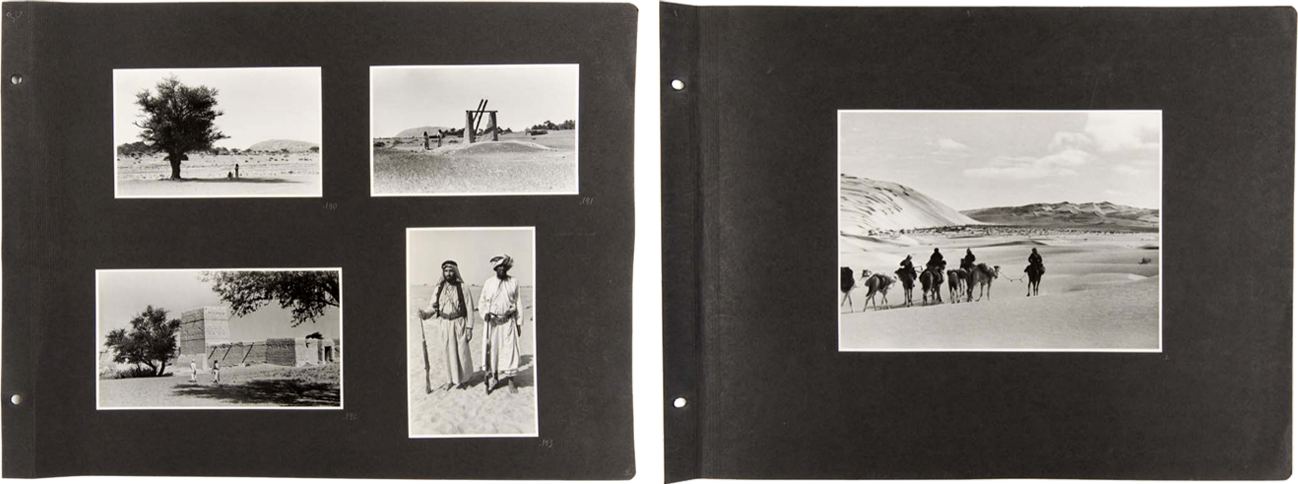
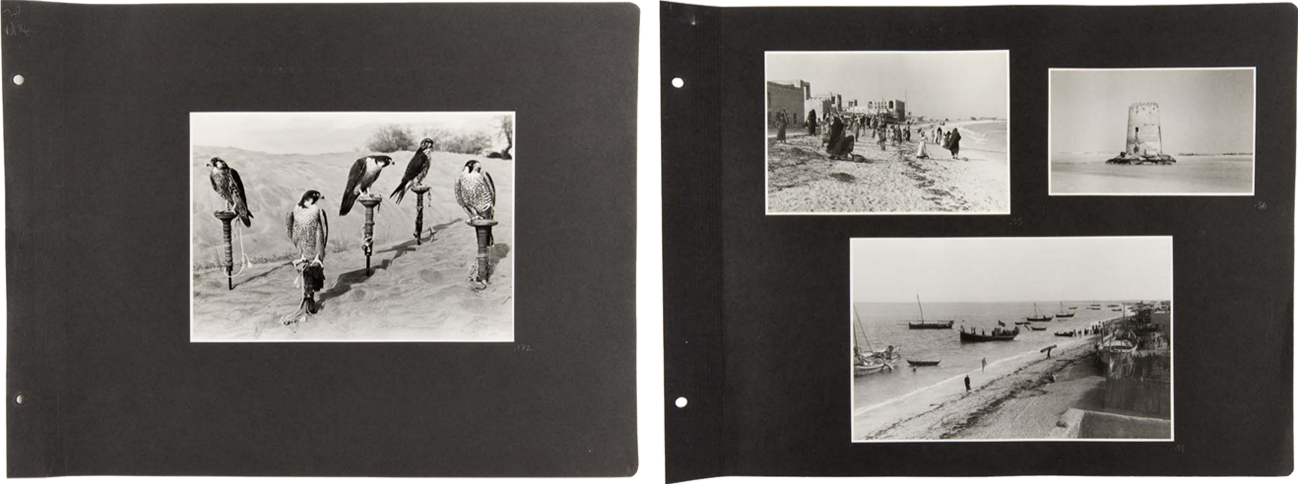
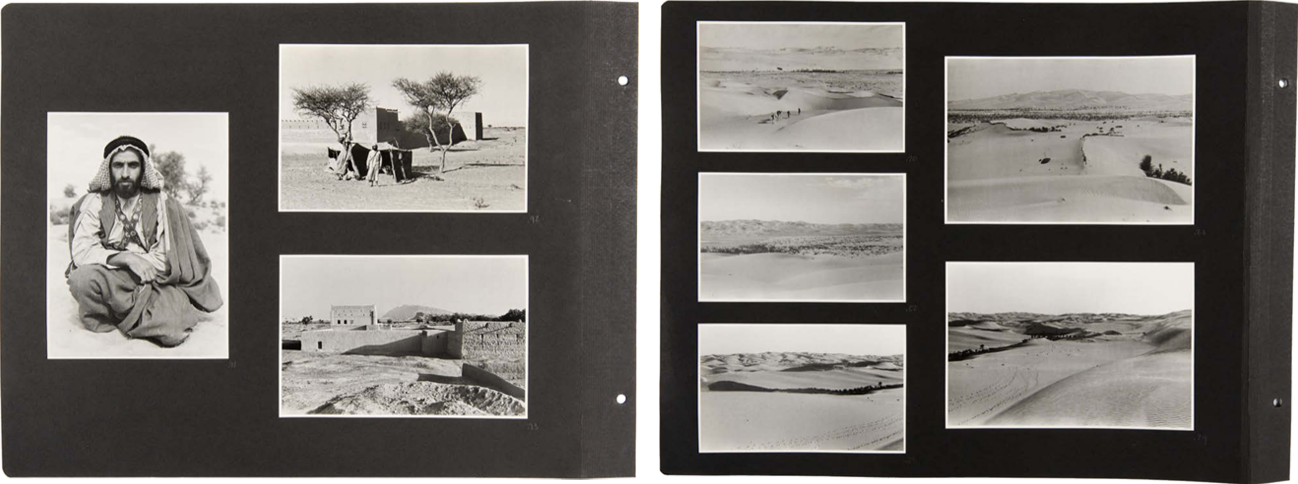
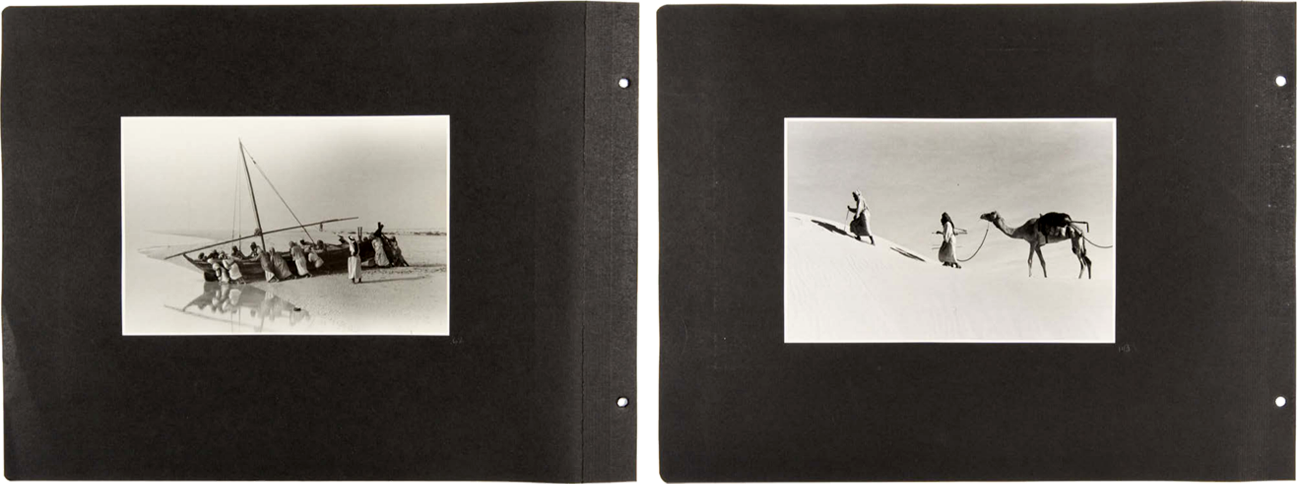
Wilfred Thesiger was a writer, an amazing photographer and a consummate explorer. His most notable works are Arabian Sands (1959) which documented his journey across the Empty Quarter of the Arabian peninsula and, The Marsh Arabs (1964) which documented his time living in the marshes of Iraq.
Timeless tracts
As a student, studying Arabic, I read Arabian Sands. I recall being very much taken with it and it bringing about a sense of nostalgia. The work by Thesiger concentrates on his Arabian travels between 1945 and 1950. It charts two crossings of the Empty Quarter undertaken between 1946 and 1948. Thesiger’s first crossing, from Mughshin in Oman to Liwa across the eastern sands, was followed by a crossing of the western sands from Manwakh in Yemen, via Liwa, to Abu Dhabi.
The book largely reflects on the changes and large scale development that took place after the Second World War and the subsequent gradual erosion of traditional Bedouin ways of life that had previously existed unaltered for thousands of years. It captured well the lives of the Bedu (Bedouin) people and other inhabitants of the Arabian peninsula and is now considered a classic in the genre of travel literature. In the 1950s, The Times described Thesiger as “the last of a great line of Arabian explorers.” In an obituary piece for The Guardian, Michael Asher wrote that Thesiger’s description of the traditional life of the Bedu was probably “the finest book ever written about Arabia and a tribute to a world now lost forever.”
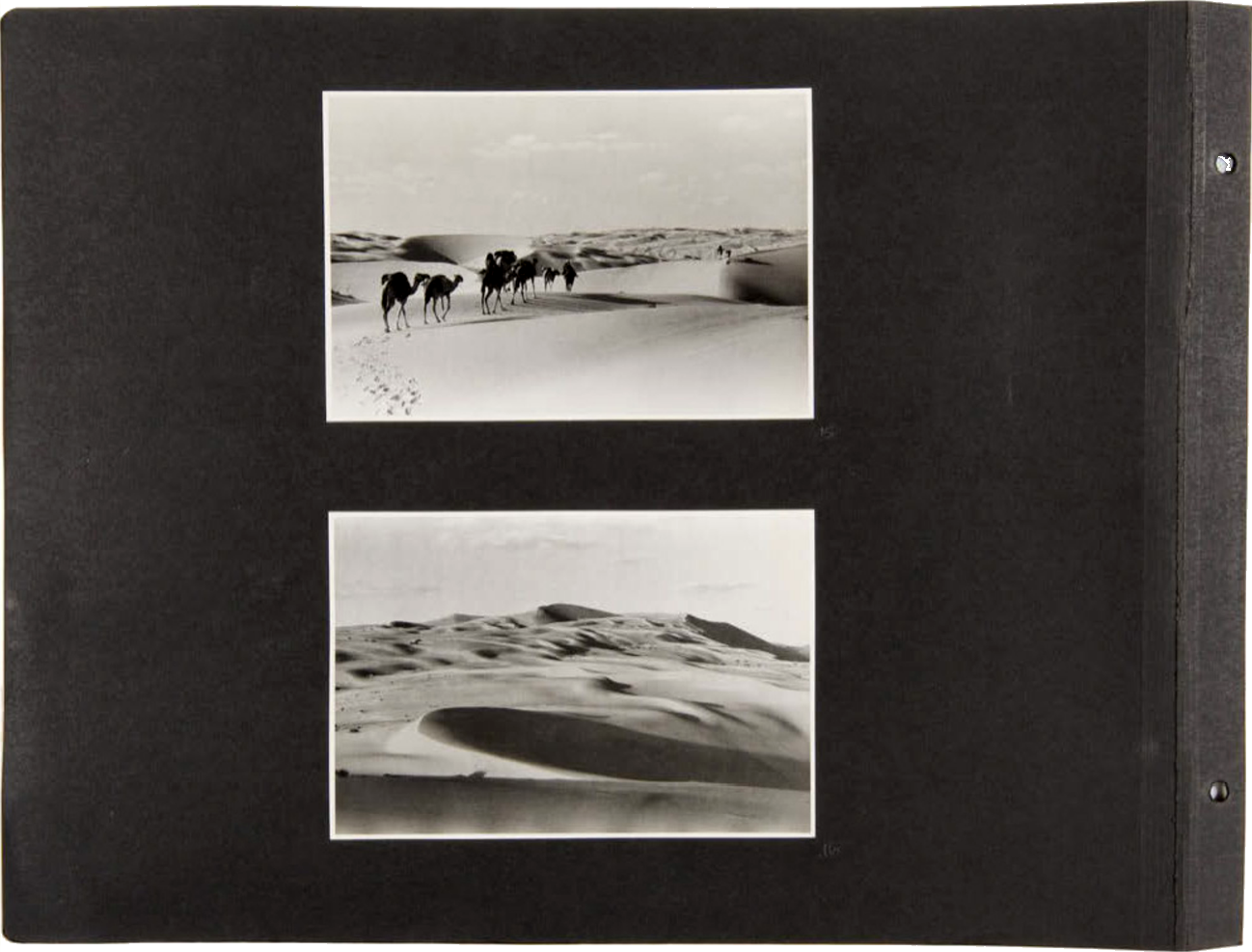
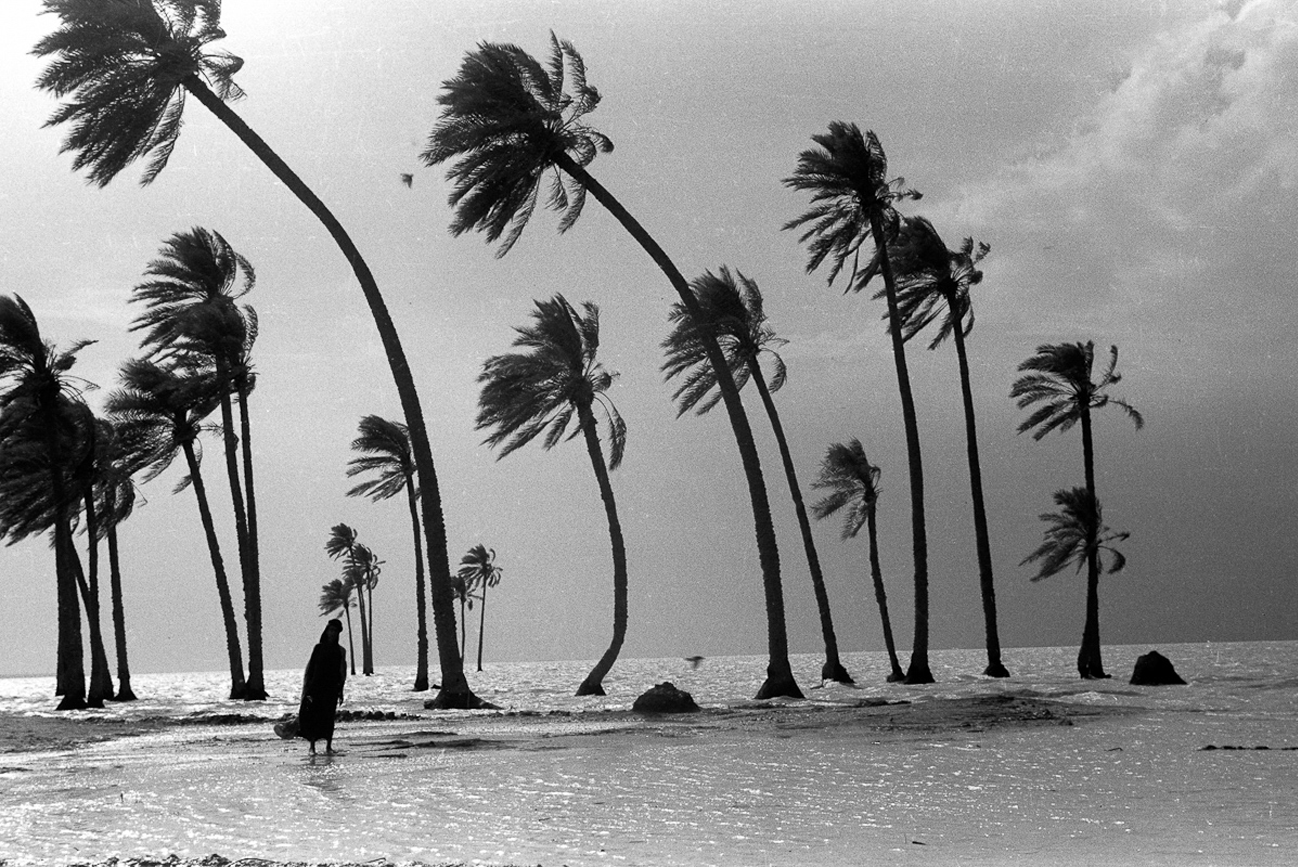
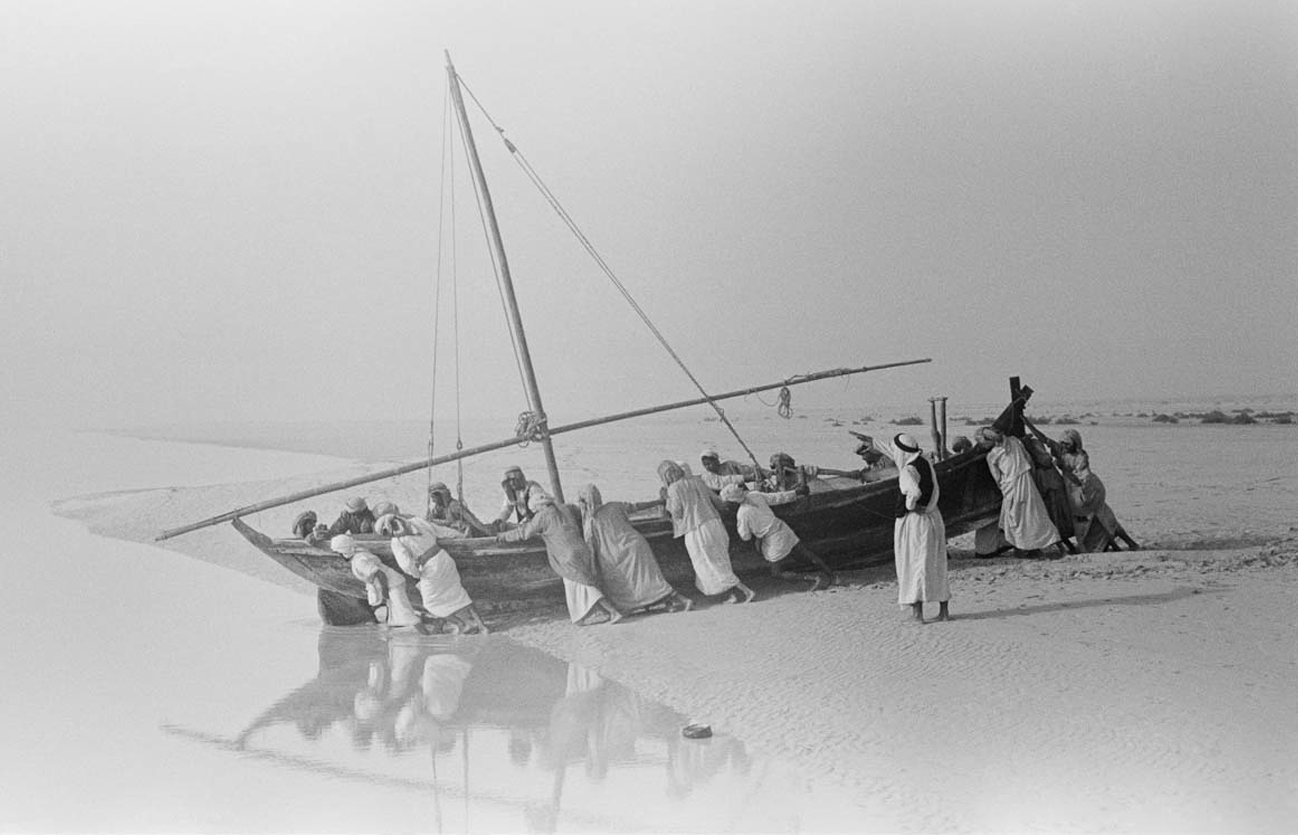
The Rub’ al Khali (Arabic: ٱلرُّبْع ٱلْخَالِي, “the Empty Quarter”) is the desert that encompasses much of the southern third of the Arabian peninsula.Arabia.. The Empty Quarter, with is ever impressive sand dunes, covers around 250,000 square miles and spans Saudi Arabia, Oman, the United Arab Emirates and Yemen.Wilfred Thesiger’s photo albums from his time in Arabia are available online via Pitt Rivers Museum, University of Oxford.Volume 13 – “Empty Quarter, Trucial Coast (1947–8)”“Only in complete silence, will you hear the desert.”Volume 14 – “Dubai, Bahrain, Oman (1948–9)”“For this was the real desert where differences of race and colour, of wealth and social standing, are almost meaningless; where coverings of pretence are stripped away and basic truths emerge.”“For a time I believed that mankind had been hypnotised by a landscape so different from anything they knew at home, and that they had been led into a state of euphoria by the beauty of the desert.”
Here’s a few of the articles I’ve had published with Middle East Policy:
Wiley Online Library (2020, September 12)
A
Lekhraibani, R., Rutledge, E. J. & Forstenlechner, I. (2015). Securing a dynamic and open economy: the UAE’s Quest for Stability, Middle East Policy, 22(2), 108–124. https://doi.org/10.1111/mepo.12132 🗒 Abstract etc.
“Humanism is the only resistance we have against the inhuman practices and injustices that disfigure human history.”
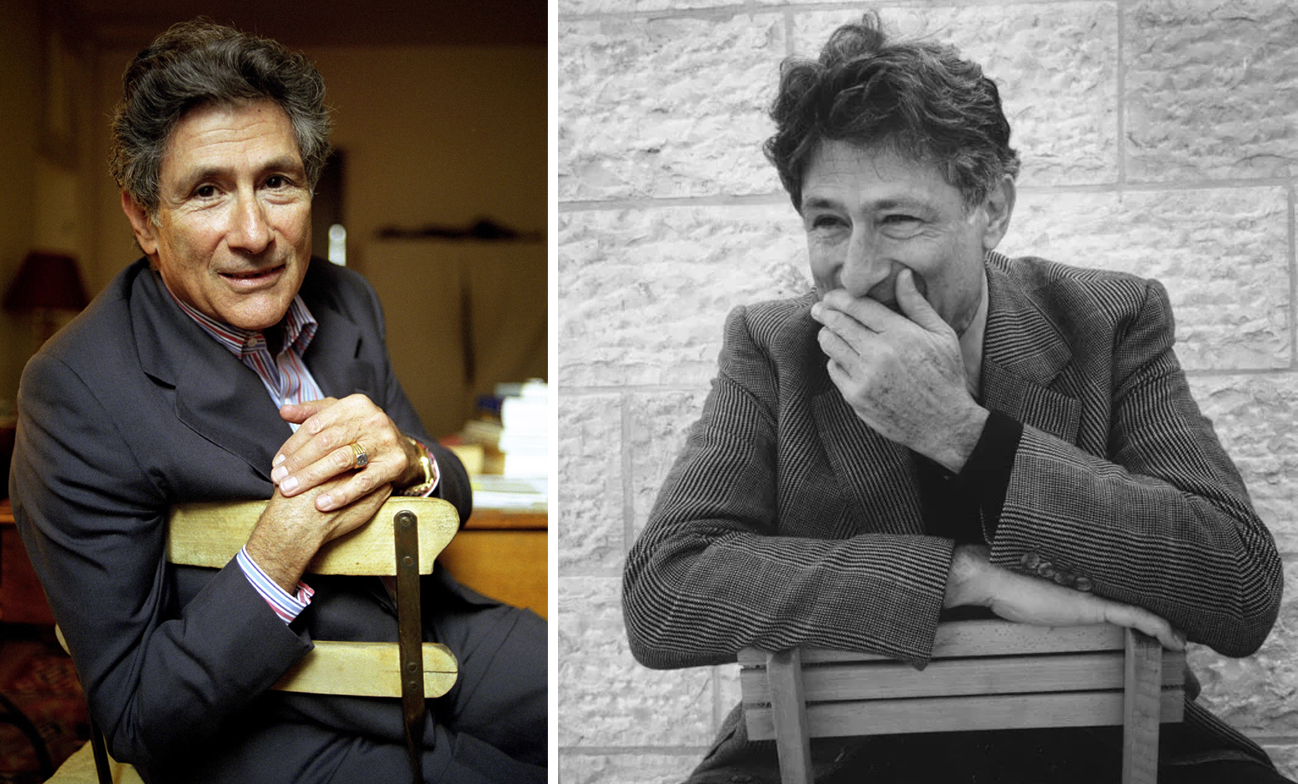
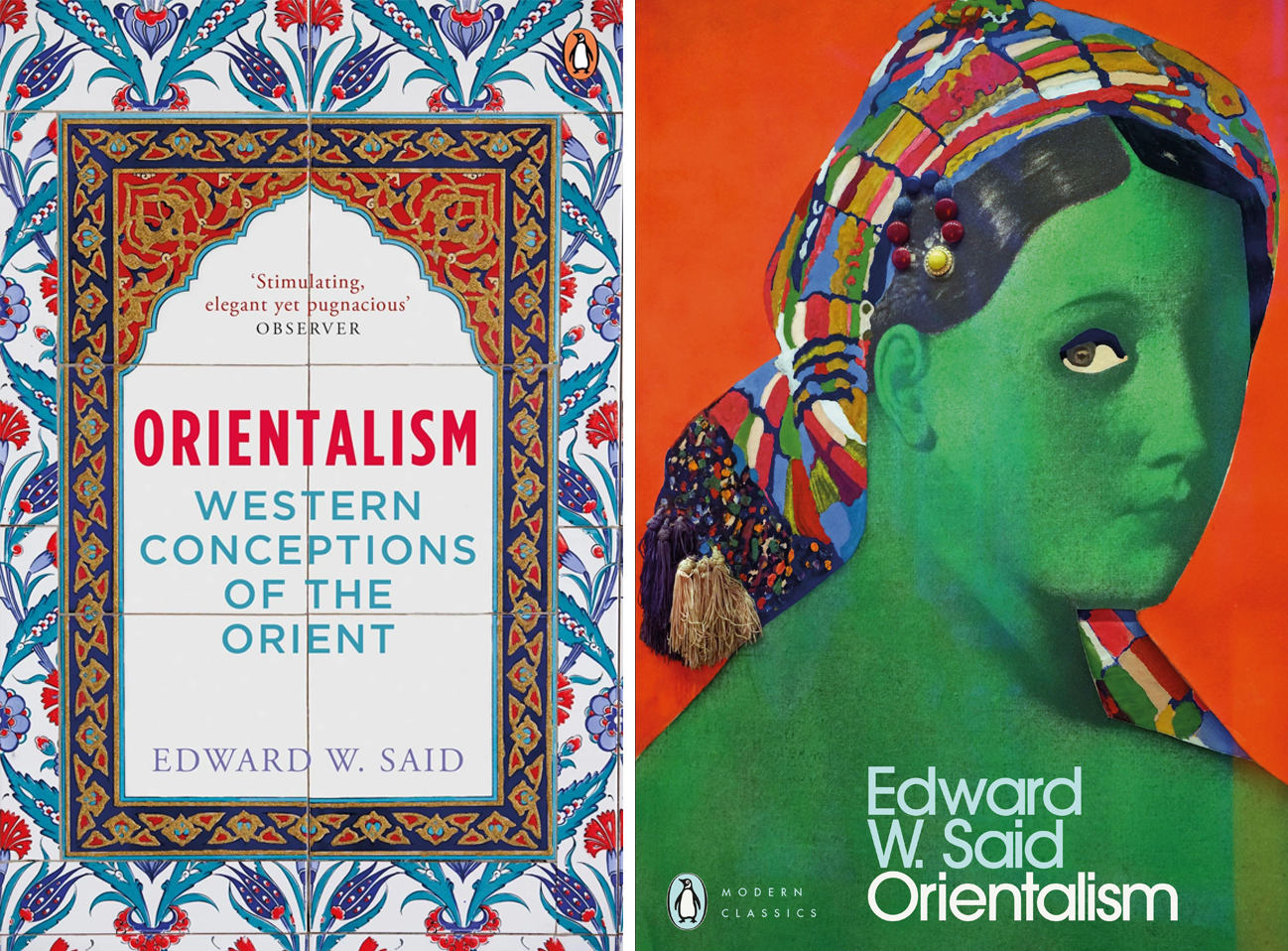
Edward Saïd’s seminal work, Orientalism, has, according to one academic, “redefined our understanding of colonialism and empire.” In Orienrltalism, Saïd surveys the history and nature of Western attitudes towards the East, and contends that “orientalism” is a powerful European ideological creation – a way for writers, philosophers and Western political powers (alongside their think tanks) to deal with the ‘otherness’ of eastern culture, customs and beliefs. Drawing on his own experiences as an Arab Palestinian living in the West, Said examines how these ideas can be a reflection of European imperialism and racism. He traces this view through the writings of Homer, Flaubert, Disraeli and Kipling, whose imaginative depictions have greatly contributed to the West’s romantic and exotic picture of the Orient.
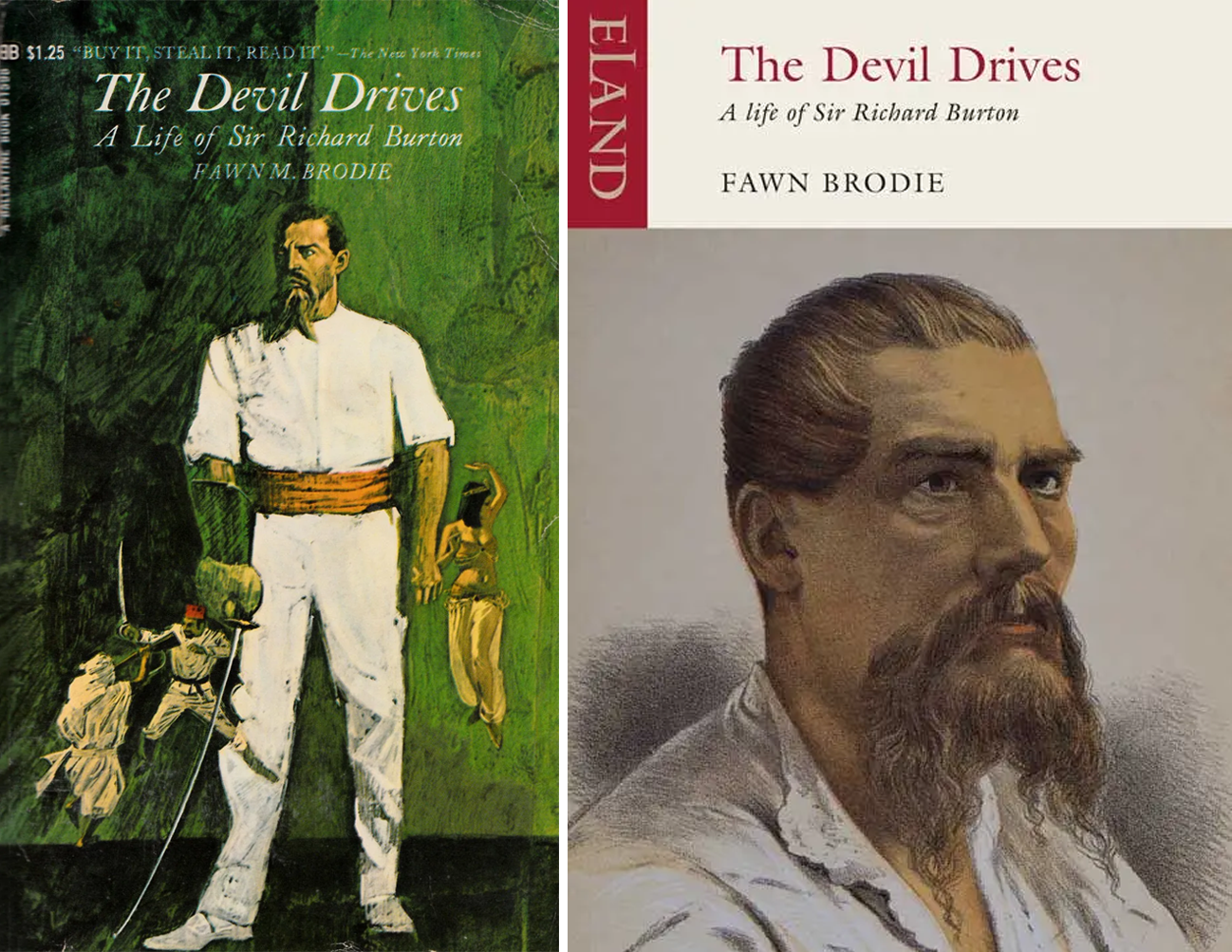
Paraphrasing from the book’s introduction, orientalism is the amplification of difference, the presumption of Western superiority, and, “the application of clichéd analytical models for perceiving the Oriental world,” from the perspectives of Western thinkers and scholars. According to Said, orientalism is the key source of the inaccuracy in cultural representations that form the foundations of Western thought and perception of the Eastern world. The theoretical framework that orientalism covers has three tenets: (1) an academic tradition or field [think: Sir Richard Burton or possibly and less so, Wilfred Thesiger] (2) a worldview, representation, and canon / discourse which bases itself upon an, “ontological and epistemological distinction made between “the Orient” and the West (3) to be used as a powerful political instrument of Western domination over Eastern countries.