Betrayal (*3)

I have updated the Arabian Gulf datasets page. The Tables, Charts and accompanying notes resulted from the research I undertook whilst writing a short piece for The Conversation. The was titled, “The Middle East conflict has swiftly exposed economic vulnerability in the region” and is posted here under the title, “Epically Furious.”
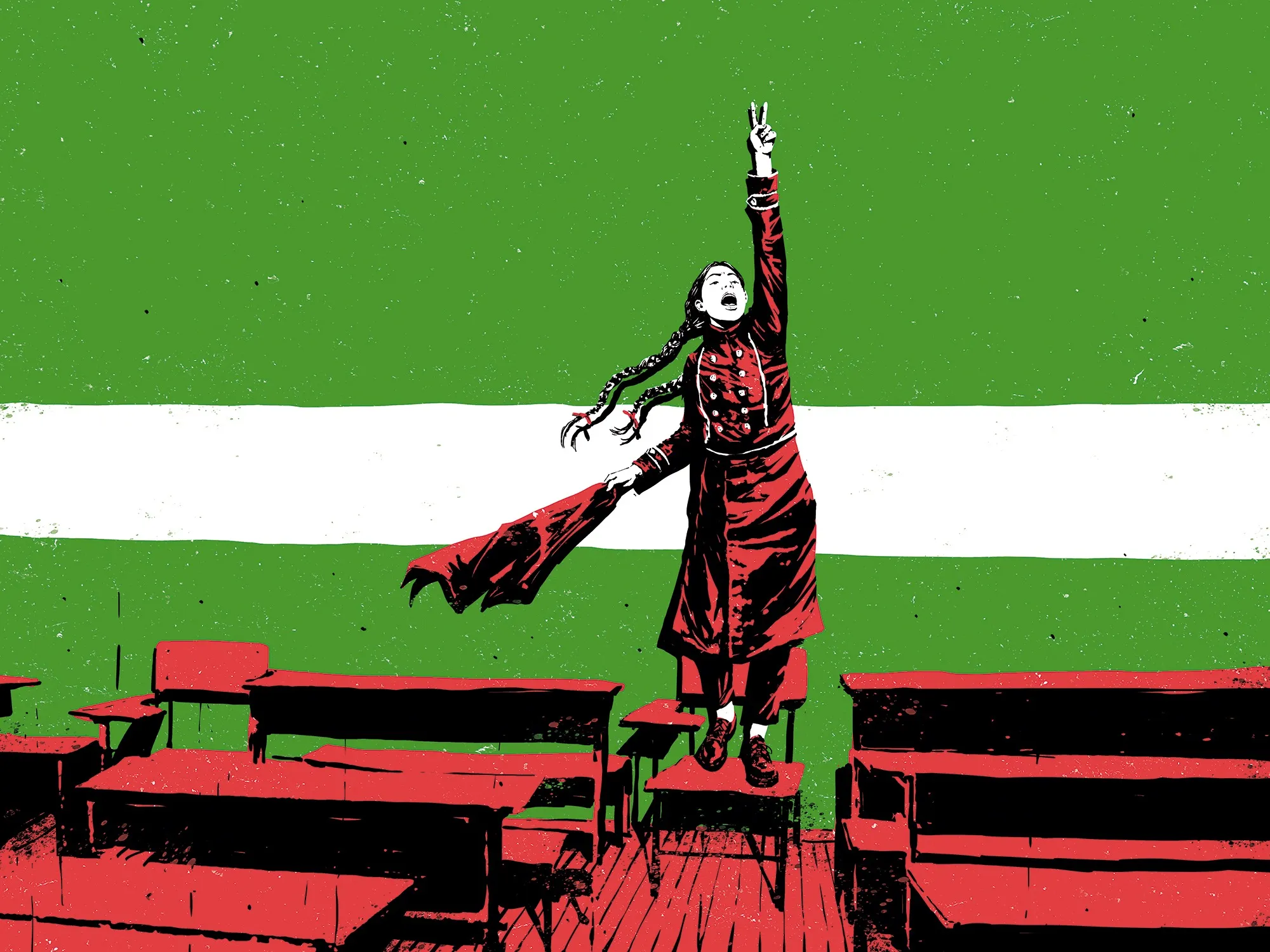
Iranian school-aged girl depicted (an illustration by Adams Carvalho).
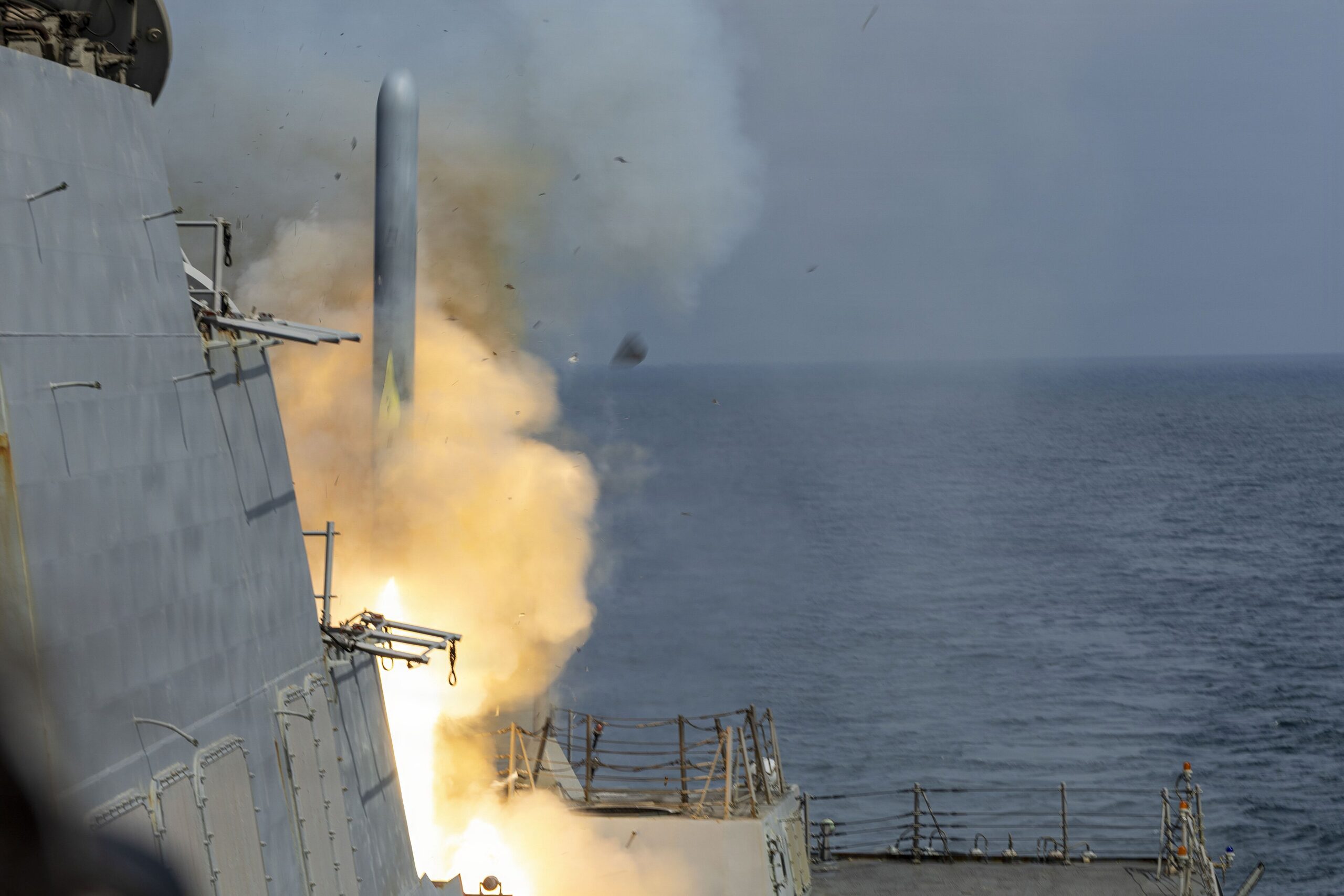
Arleigh Burke-class guided-missile destroyer USS Delbert D. Black (DDG 119) fires a Tomahawk Land Attack Missile (TLAM) in support of Operation “Epic Fury,” February 28, 2026. (a U.S. Navy photo)

Regarding the 2026 Minab school attack, this is what we do know: on 28 February 2026, the first day of the America and Israel’s war on Iran, the Shajareh Tayyebeh girls’ elementary school in Minab (southern Iran) was destroyed by a missile attack/strike (words matter, take your pick). Iranian authorities told the New York Times that the attack killed at least 175 people, including scores of civilians. Human Rights Watch reviewed lists with dozens of names of children and adults reportedly killed in the attack, and was able to immediately match some names with ages and other identifying information on body bags and caskets.
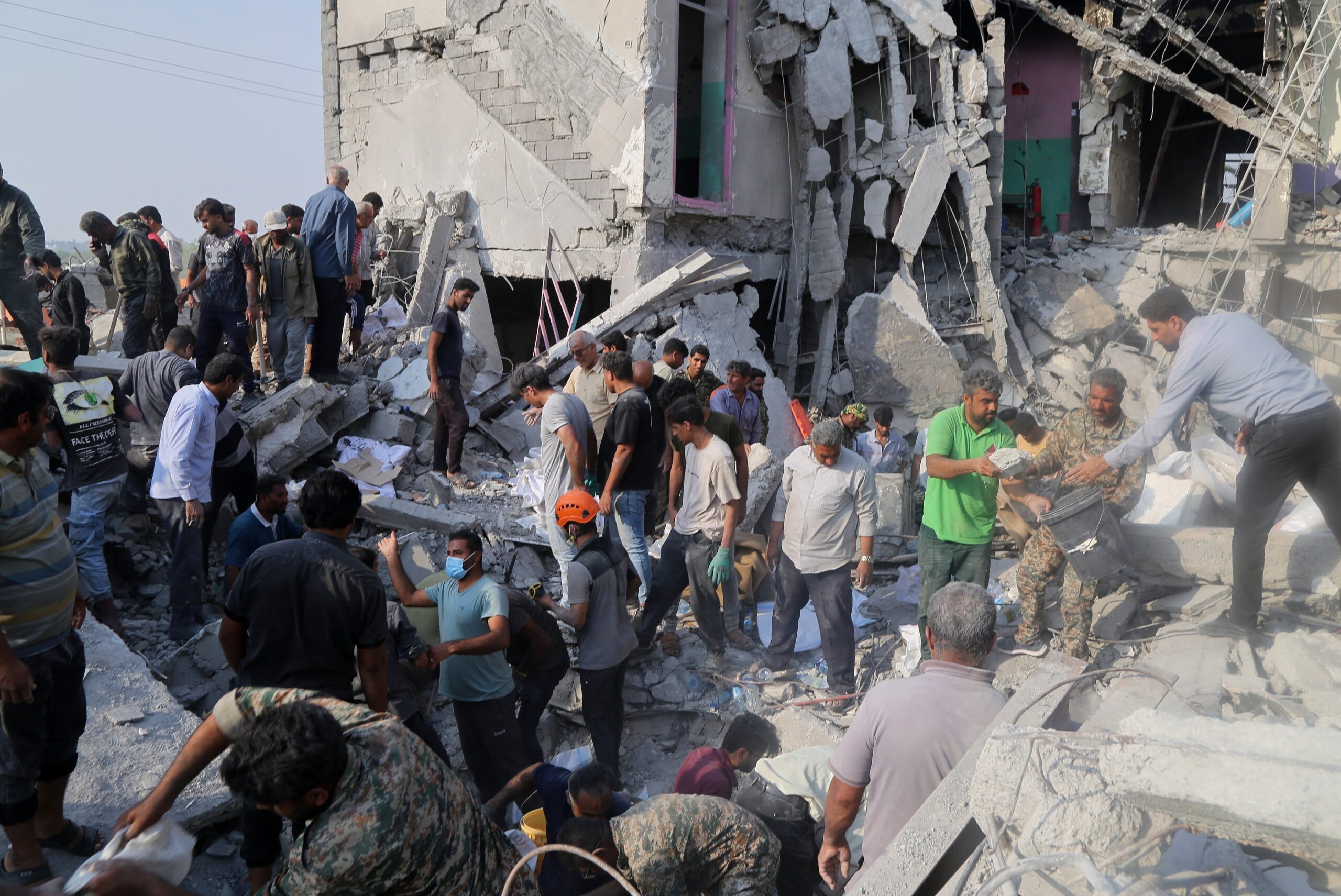
Shajareh Tayyebeh school in Minab, Iran, February 28, 2026. (a Mehr News Agency/Abbas Zakeri photo).

The New York Times reported that the investigation found that the attack was the result of a targeting mistake by the US military, which was carrying out strikes on an Islamic Revolutionary Guard Corps naval base of which the school building had previously been a part. The report said that US Central Command officers created the target coordinates for the strike using outdated data provided by the US Defense Intelligence Agency.
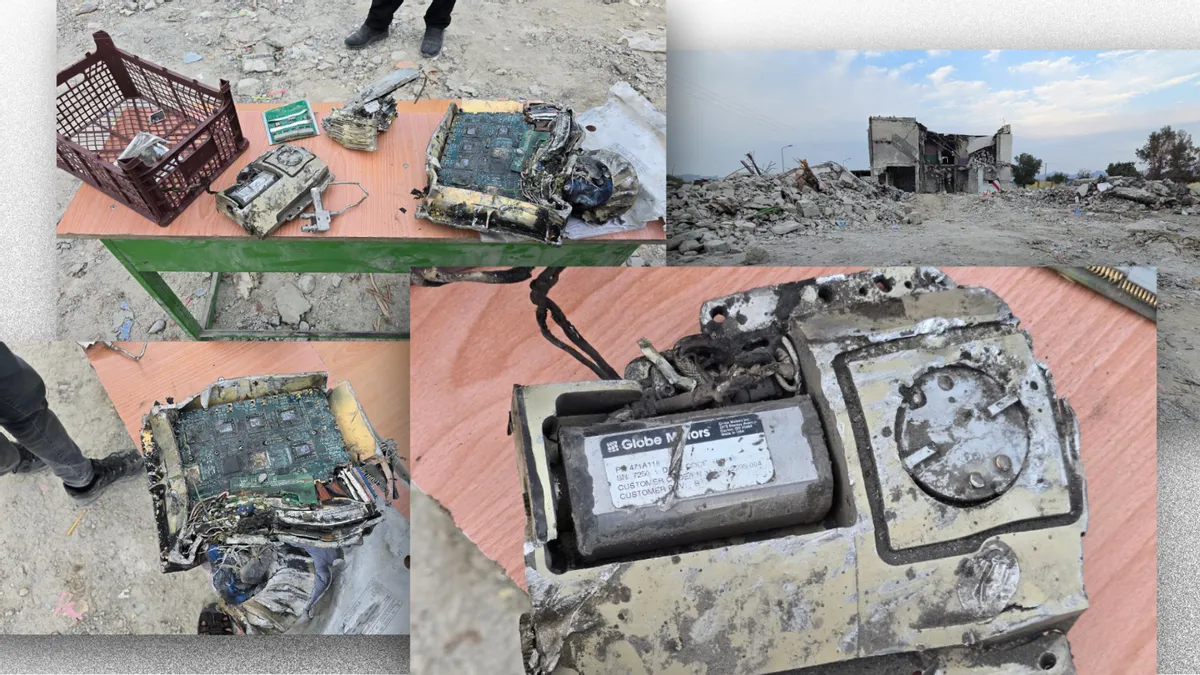
A compilation of image showing fragments of U.S.-made missile beside the bombed Iranian girls’ school in Minab (an IRIB Telegram Channel photo).

Four avenues of investigation regarding the Tomahawk attack on Minab Girls School are here:

1. The New York Times
2. Snopes
3. Wikipedia
4. Amnesty International (with satellite imagery)

Graves being dug for children killed in deadly strike school in Minab (an AFP/Iranian Press Center photo).
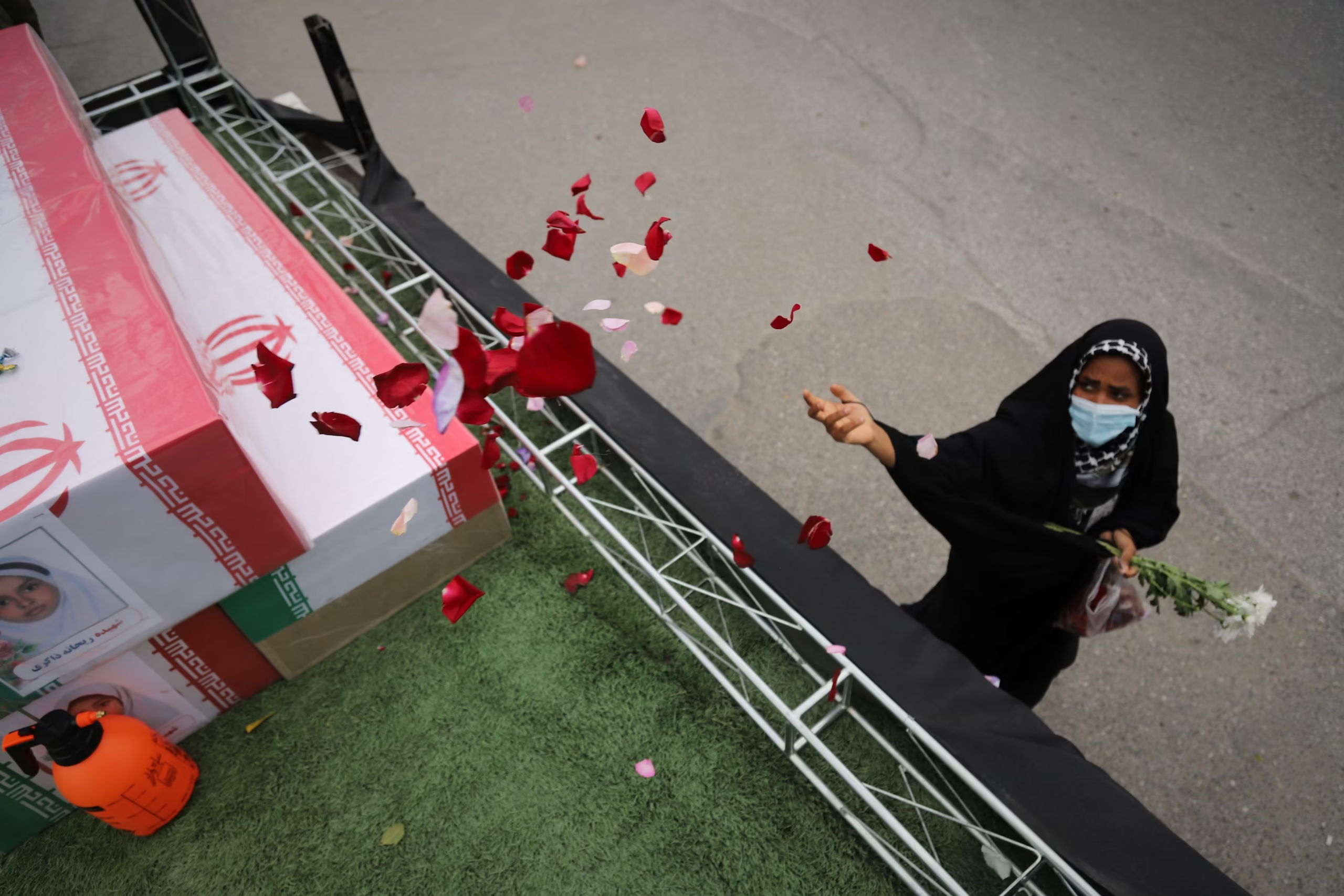
Poignant Petals (an Amirhossein Khorgooei/AP photo).

It is hard not to conclude that Iran was blatantly betrayed twice by the U.S. administration. (Betrayal 1) Oman and Tehran were fooled once back in June of 2025. (Betrayal 2) In a laudable and concerted effort not to be fooled for a second time, on February 27th Oman’s Foreign Minister, Badr Albusaidi, got on a plane and flew all the way to Washington D.C. and immediately went on to CBS’s flagship “Face The Nation” program to tell the American public directly that the concessions Iran had just offered to give to Trump were game changing and (Iranian) regime saving. Albusaidi—on behalf, I would ague, of all GCC countries—was doing his utmost to ensure that conflict would not break out, at least not over that weekend. Afterall, could he categorically guarantee that Messrs Kushner and Witkoff (Trump’s self-appointed diplomatic duo) would not possibly forgot to convey the message to the American people themselves? I would argue too that the Iranians themselves genuinely believed that the seismic concession that they’d just offered was enough to have at least forestalled any prospect of war braking out that weekend. If they had not genuinely believed this, there is no way that Ayatollah Ali Khamenei would have been where he was that morning with both his key advisors and members of his nuclear family around him—his primary residence in the heart of Tehran in broad, early Spring, morning daylight.

(Betrayal 3) The Gulf countries themselves will not have been happy that despite all their protestations—both on TV and behind closed doors—the Americans went ahead and for a second time attacked Iran without warning and without imminent threat. The special relationships that the leaders of Saudi Arabia, Qatar and the UAE had forged with Trump—furnished and oiled so-to-speak, with staggeringly large investment into America and the purchasing of U.S.-made military industrial equipment deals—appeared to have no influence on Trump’s decision to subject the region to another purpose-wise, ill defined war. The betrayal (of trust, friendship) was all the greater to the GCC countries because over the past decades they had spent billions upon billions on American armaments, withstood some domestic disquiet in offering to host and mostly cover the costs of American military bases on all six of their territories and indeed, a few of this countries had even signed up to Trump and Kushner’s Abraham Accords. The Gulf countries are right to feel aggrieved as the “safe haven” they had worked so hard to achieve was partly underwritten on the assumption that having an American presence in the background on their soil and at their ports, would prevent not provoke attacks.

Epically Furious

 Blog Publications Reports

First published in:

Academic rigour, journalistic flair


Rutledge, E. J. (2026, March 9). The Middle East conflict has swiftly exposed economic vulnerability in the region. The Conversation. https://theconversation.com/the-middle-east-conflict-has-swiftly-exposed-economic-vulnerability-in-the-region-277666
🖨 Print-friendly PDF


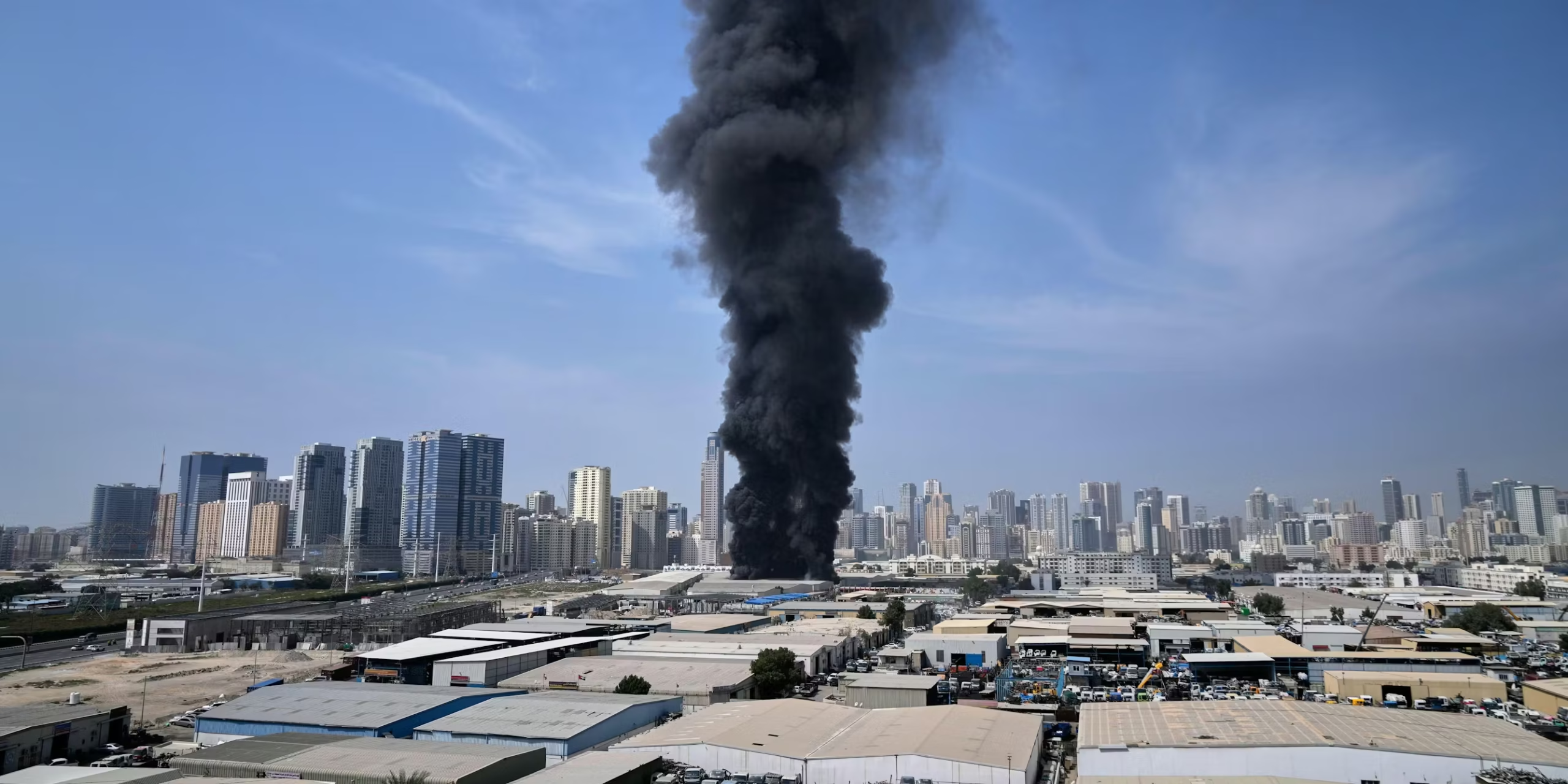
Smoke rises from Sharjah City in the United Arab Emirates (an Altaf Qadri/AP photo).

At the end of 2025, the Gulf states received high praise for their economic resilience. According to reports by the World Bank and the World Economic Forum, the region was stable, modern and reliable.

Now the six countries of the Gulf Cooperation Council (GCC) – Bahrain, Kuwait, Oman, Qatar, Saudi Arabia and the United Arab Emirates – are watching on nervously. The economic damage done by what has become a regional conflict, bringing an abrupt loss of stability, could be huge.

Aside from Saddam Hussein’s foray into Kuwait in 1991, these six countries have successfully steered clear of conflict on their home turf over a long period. They avoided the revolutionary upheavals which affected Egypt (1952), Iraq, Syria and Iran (1979). They steered clear of any spillover from the long-running Israel-Palestine conflict.

The group was mostly unaffected by the war between Iran and Iraq. And aside from a short-lived uprising in Bahrain in 2011, the GCC emerged largely unscathed from the regional turmoil of the Arab Spring in 2010 which spread from Tunisia and and Egypt and led to violent instability which continues to this day in Libya, Yemen and Syria.

The GCC’s comparative stability underpins its attractiveness as a global hub for money and modernity. Success in luxury tourism has filled places such as Dubai and Abu Dhabi with five (and even a seven) star hotels. Only France has more Michelin-starred restaurants than the United Arab Emirates (UAE). There is cutting-edge technology in Qatar’s energy sector, and a vast AI campus in the UAE.

It is these kinds of projects which led the World Bank and the World Economic Forum to publish glowing reports on the region recently. Both organisations agreed in late 2025 that oil wealth was being wisely invested for the future.

The general view was that the GCC was a place of economic stability and diversity. A director of the World Bank, Safaa El Kogali, said that the region’s embrace of a digital future had been nothing short of “remarkable”.

But US military bases in all GCC countries have come under attack. Drones have hit oil tankers. The Strait of Hormuz, vital for the transit of much of the world’s energy is effectively closed.

Missiles from Iran directly hit three Amazon web service facilities, one in Bahrain and two in the UAE, leading the company to recommend that GCC businesses back up their data and migrate it to data centres in the US.

Stock markets across the world have fallen sharply. Energy bills and petrol prices have soared as oil and gas refineries have been shut in Kuwait, Saudi Arabia, Qatar and the UAE.

Under fire

Despite efforts to diversify economies away from oil, for now the region is still clearly dependent on oil exports and food imports, hence the worries over Hormuz. There are fears for its numerous desalination plants, which provide drinking water (as well as filling infinity pools and keeping golf courses green).

And its status as a safe and sunny sanctuary for conference conveners, influencers, holiday makers and owners of second homes is now being questioned.

Even if the conflict were to end soon, reputational damage has been done. People are fleeing the area, as images of smoke filled skies fill screens.

This will inevitably dampen foreign direct investment in the immediate future. The course and duration of the conflict will determine the degree to which the region can bounce back and continue to attract holidaymakers and young professionals and those seeking a life with more sun and less tax.

From a geopolitical perspective, the region’s recent success – aside from its vast and easily extracted natural resources – has rested largely on the assumed political stability that was underwritten by hosting US military bases and buying US military hardware. Both of these could now prove to be an economic liability.